Your home is likely your single biggest asset. But what happens to it when you're gone? For most homeowners, the answer is frightening. Without a plan, the state of California steps in. A judge decides who gets your property. Your family pays tens of thousands of dollars in court fees. And the entire process happens in public, where anyone can see your business.
Here’s a short preview of this episode: [Insert YouTube shorts here]
This isn't fear-mongering. It's the reality of probate.
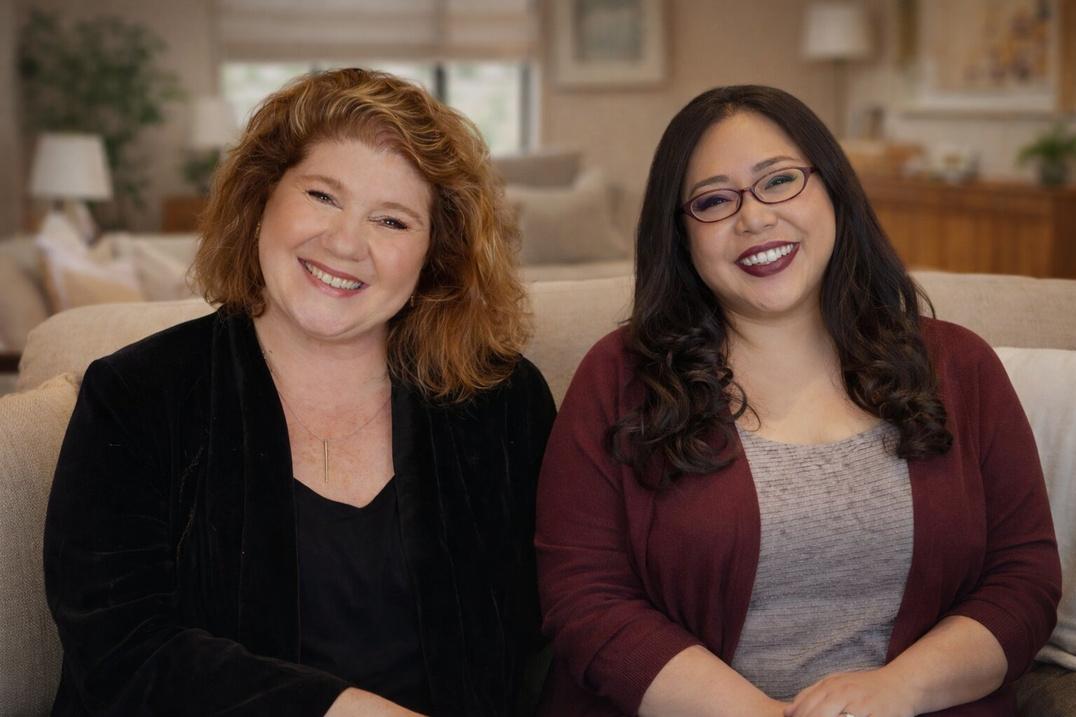
The good news? It's completely avoidable. I sat down with Cecilia Amo estate planning attorney on the REalizations Podcast, to unpack exactly how homeowners can protect their real estate, avoid probate, and design a legacy that actually works for the people they love.
Why I Brought Cecilia Amo Estate Planning Attorney on the Podcast
My mission with REalizations is simple. I wanted to educate the American public about what real estate professionals actually do. The commission lawsuits a while back felt disrespectful and profoundly ignorant. Wealthy plaintiffs with ties to Zillow and Trulia were painting an entire industry with a broad brush.
I could stay mad for years. Or I could do something positive.
So I started this podcast to break down the complexity of real estate. From city budgets to ethics requirements, from constant education to vendor coordination. I also wanted to warn young people thinking about this career. It is not super easy.
But I quickly realized something. Estate planning is a critical missing piece in most real estate conversations. Homeowners pour everything into their properties. Then they leave that wealth unprotected. That’s why I brought Cecilia Amo estate planning attorney, onto the show.
Why Estate Planning Matters in Real Estate
Real estate is your primary wealth asset for most families. In California, where I practice, the average home value in many neighborhoods exceeds a million dollars. That’s not just a house. That’s your retirement. Your children’s inheritance. Your legacy.
Without a plan, the government steps in.
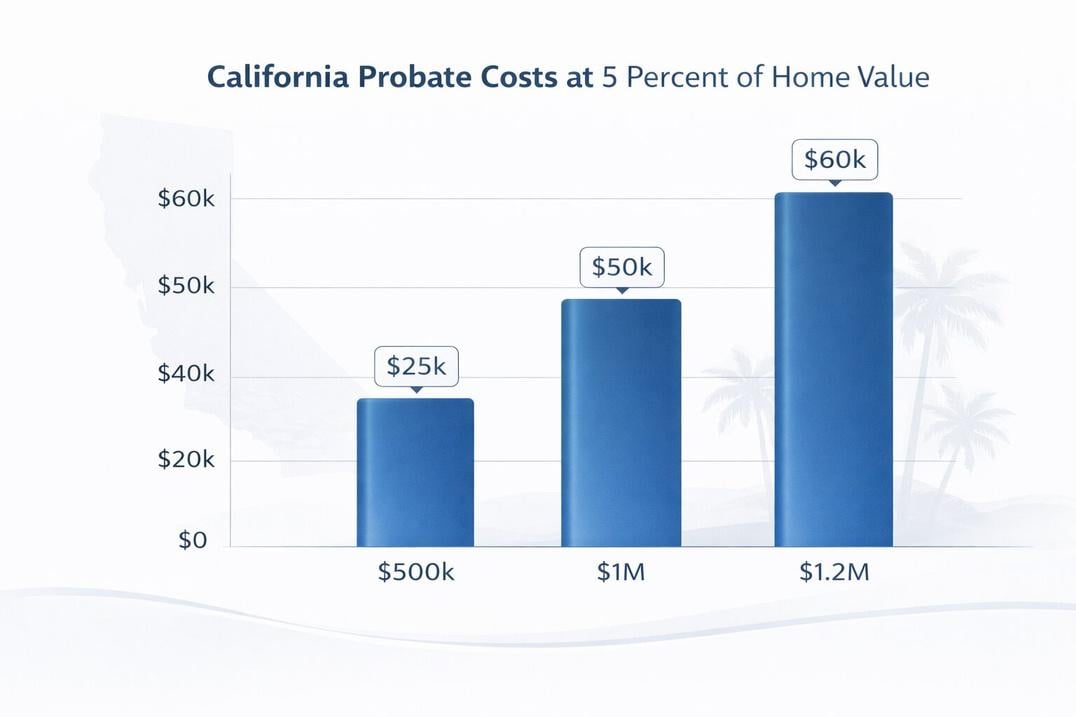
"If you don’t create a plan, the government already has one for you. There is a default estate plan that is in place, whether you like it or not. Estate planning is how we opt out of the government’s default plan. And in California, that default plan is very expensive. On average, probate can cost around 5 percent of the market value of your assets. That’s not what you owe. That’s market value. For a million-dollar home, that’s $50,000 your family will never see again."–
Cecilia told me that on the podcast, and it stopped me cold. The government’s default plan is expensive. It’s stressful. And it’s completely avoidable.
Many homeowners don’t see the risks coming. They think a simple will is enough. Or they add a child to the deed and call it done. These moves can backfire in ways most people never anticipate.
According to the California Courts self-help guide on probate, the process can tie up assets for months or even years while your family navigates a complex legal system.
The Real Cost of Probate (And Why Cecilia Amo Warns Against It)
Probate is the court process that distributes your assets after death. In California, it’s public. Anyone can look up your records. Scammers data-mine probate filings to target grieving families.
Cecilia shared a chilling story. Tony Hsieh, the founder of Zappos, died without a proper plan. His personal assistant filed millions of dollars in creditor claims against his estate. His family had to fight it in court.
Another colleague had a client whose mother died without an estate plan. An uncle showed up from the Philippines with a fake will claiming he should get the house. The daughter had to pay lawyers to litigate against a forgery.
Probate costs roughly 5 percent of the market value of your assets. Not what you owe. Market value.
|
Asset Value |
Estimated Probate Cost (5%) |
|
$500,000 |
$25,000 |
|
$1,000,000 |
$50,000 |
|
$1,200,000 |
$60,000 |
That’s a year of college. A business that could have been started. A wedding that could have been paid for. A down payment on another house.
For a deeper breakdown of the California probate threshold and which assets trigger court supervision, Cecilia's firm explains the current $166,250 limit and exceptions to the rule.
If you are currently facing a trust and probate real estate sales situation as an executor, administrator, or beneficiary, I have written a detailed FAQ covering timelines, legal requirements, and how to work with a realtor experienced in these transactions.
The emotional cost is harder to measure. Your family should be grieving together. Not fighting in court. Not defending against false claims. Not trying to figure out where you buried your aunt because no one had legal authority to make decisions.
Estate Planning Is About Designing Outcomes—Not Just Documents
Here’s what most people get wrong. They think estate planning is a stack of papers you sign once and forget.
"Estate planning isn’t just about documents. It’s about designing outcomes in a worst-case scenario. The only way you can do that is by understanding how the law works, how it applies to your situation, and figuring out what that outcome is. Then you create the plan to get there. The documents are just the side effect. They’re the byproduct. They’re the tools. You cannot start with the documents because then you have no idea where you’re going to wind up."–
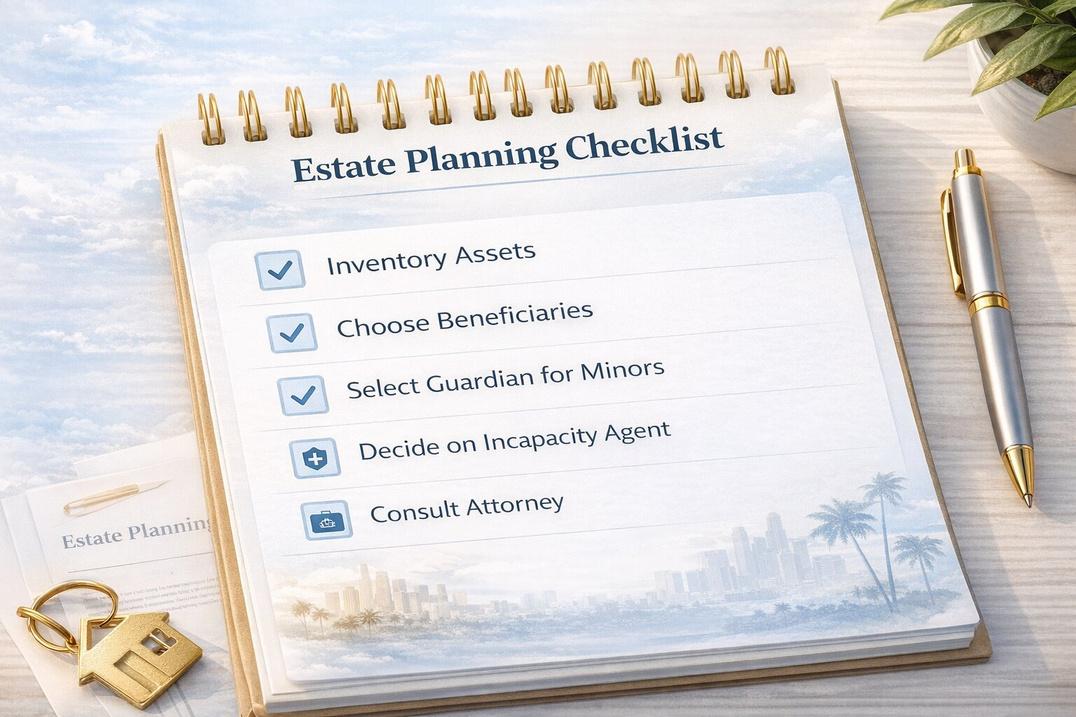
Cecilia drilled this into me during our conversation. You start with the outcome you want. Then you work backward. What happens to your kids if both parents die? Who manages your finances if you become incapacitated? How does your partner access the house if you’re unmarried?
The documents are just tools. The strategy comes first.
A study from Caring.com found that only about one-third of Americans have an estate plan. That means two-thirds are leaving their families to the government’s default plan.
Cecilia’s book, Your After Credit Scene: A Nerd’s Guide to Wills, Trusts, and Legacy, reframes this entire conversation. She uses pop culture references like Harry Potter and Star Wars to make complex legal concepts relatable. The movie of your life has credits. What happens in your after-credit scene?
Is your family free to remember you? Or are they stuck in probate court?
Common Mistakes Cecilia Amo Sees Homeowners Make
I asked Cecilia what mistakes she sees most often. Her list was eye-opening.
-
Adding children to the property title. Parents do this, thinking it avoids probate. It does. But then the child loses something called step-up in basis. When they sell, capital gains tax hits hard. If they had inherited instead, the tax burden would be much smaller.
-
DIY wills and online shortcuts. Those free will templates from charitable organizations? They prominently display what you plan to give them. They’re not designed to protect you. They’re designed to benefit the organization.
-
Misusing legal tools. Transfer-on-death deeds are all over Instagram as a cheap alternative to trusts. They have serious limitations.
-
False sense of security. Having any document doesn’t mean having the right document. Outdated plans fail. Unfunded trusts fail. Misaligned beneficiary designations fail.
A report from the American Bar Association highlights that even small errors in estate documents can trigger years of litigation.
Cecilia’s firm includes a free review every three years for clients. Plans fail when they’re out of date. Your life changes. Your plan should too.
For a full breakdown of how to avoid these traps, visit Cecilia’s legacy planning page.
Transfer-on-Death Deeds: What Cecilia Amo Wants You to Know
Transfer-on-death deeds have become popular in California. The law is relatively new. Here’s how they work. You file a deed naming a beneficiary. When you die, the property transfers without probate.
Sounds great, right? Cecilia explained the risks.
-
A TOD deed only works at death. If you become incapacitated, it does nothing. Your family still needs court intervention to manage the property.
-
There’s no contingency planning. What if you and your beneficiary die at the same time? What if your beneficiary becomes incapacitated? The property goes to probate anyway.
-
TOD deeds are promoted on social media as cheaper than trusts. That’s true in the short term. But cheap isn’t the same as complete. You save a few thousand dollars now. Your family pays much more later.
For the right person in the right situation, a TOD deed can help. But it’s not a replacement for comprehensive planning. You can read more about California’s TOD deed requirements on the California Legislative Information site.
Revocable Living Trust Explained by Cecilia Amo Estate Planning Attorney
Here’s the gold standard for California homeowners. A revocable living trust California residents use to avoid probate entirely.
Cecilia explained it simply. A trust is like a basket. You put your assets in the basket. The trust document says what happens to those assets if you die or become incapacitated. No judge required.
|
Tool |
Avoids Probate |
Handles Incapacity |
Flexibility |
|
Will |
❌ |
❌ |
Low |
|
TOD Deed |
⚠️ |
❌ |
Medium |
|
Living Trust |
✅ |
✅ |
High |
Revocable means you can change it. You’re in control. You can update beneficiaries. You can add or remove assets. You can revoke the entire trust if you want.
Living means it operates during your lifetime. Unlike a will, which only matters after death, a trust works now.
Cecilia breaks down the specifics of putting your home in a trust in a detailed two-part series on her website, including the key differences between revocable and irrevocable trusts for California homeowners.
Incapacity planning is the hidden gem here. If you become sick or injured, your successor trustee steps in. No court. No delay. No public records.
Cecilia also debunked a myth she sees on Instagram. Some people claim trusts are bulletproof against lawsuits. That’s not true for revocable living trusts. Asset protection trusts exist, but they start at around $25,000 to $30,000. And you can’t even set one up in California easily.
The main reason for a revocable living trust is to avoid probate. That’s it. And that’s plenty.
Revocable vs Irrevocable Trusts: What You Need to Know
Cecilia broke down the difference clearly.
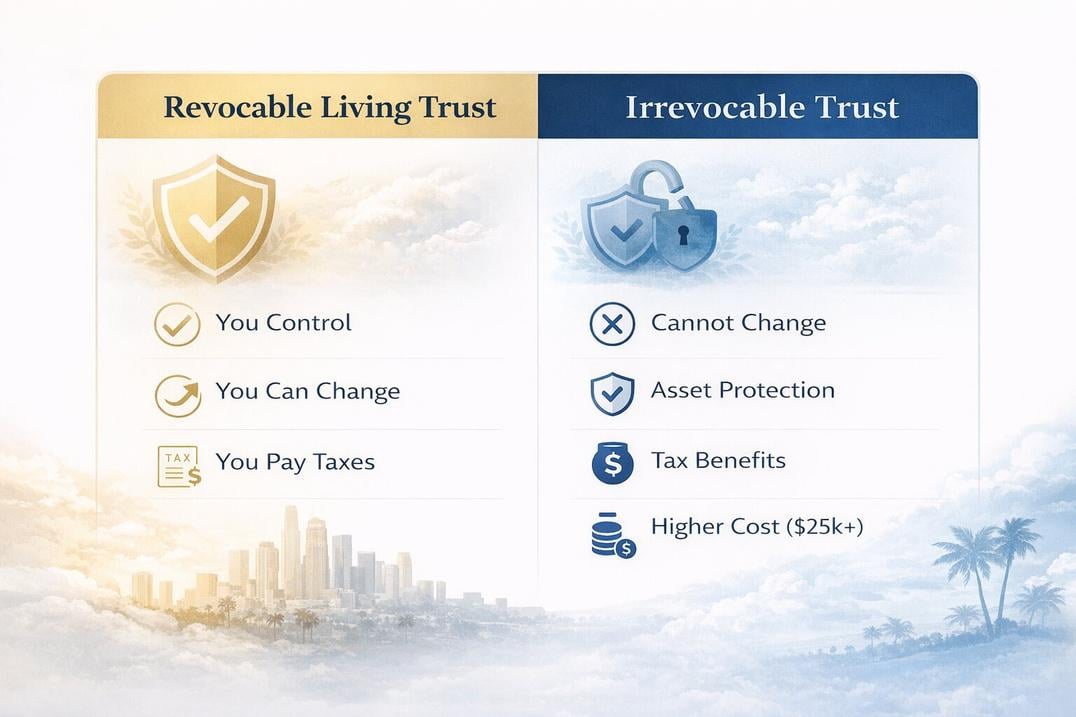
A revocable trust you control. You can change beneficiaries. You can move assets in and out. You pay taxes on the income because it’s still yours.
An irrevocable trust you cannot change. Once assets go in, they’re generally out of your control. But that also means they’re out of your taxable estate. These are used for Medicaid planning, asset protection, and tax reduction.
Irrevocable trusts are more expensive and more complex. Most homeowners don’t need them. But for high-net-worth individuals or those with specific goals, they’re powerful tools.
The key takeaway? Don’t let anyone sell you an irrevocable trust without a very clear explanation of why you need it.
Estate Planning for Single Homeowners and Non-Traditional Families
This section of our conversation hit me hard.
If you’re single or don’t have children, the government’s default plan is even worse. There’s no obvious heir. Your assets could go to distant relatives you haven’t spoken to in decades.
Cecilia dedicated a chapter in her book to blended families, found family, and child-free people.
She told me a heartbreaking story from a personal injury attorney friend. A woman’s partner was killed in a tragic accident. There was no plan. The partner’s mother decided not to tell the woman where the funeral would be. She never got to say goodbye.
That’s not a legal failure. That’s a planning failure.
For unmarried couples, for chosen family, for anyone without a default inheritance structure, estate planning real estate protections are even more critical. You need documents that name your partner. You need advance health care directives. You need financial powers of attorney.
Without them, blood relatives win. Every time. Even if they’re estranged. Even if they’re cruel. Even if your partner loved you for thirty years.
The Relational Approach Cecilia Amo Brings to Estate Planning
Cecilia started her career in catastrophic injury litigation with Johnny Cochran’s firm. She was the first Asian attorney hired there. She saw families after a crisis. She saw what happens when there’s no plan.
Then she met her mentor in estate planning. She realized she could help families proactively. She could keep them out of court before tragedy struck.
That shift changed everything.
Cecilia told me she hates endings. She never thought she’d work in a field where death is always present. But planning for the worst actually frees people to live better.
"When you put into place a complete holistic life and legacy plan, something that will work legally, practically, and relationally, something that you have absolute clarity over, you get this peace of mind that is actually really freeing and allows you to live life more intentionally."–
Parents who choose guardians for their children can live intentionally. They can build relationships between their kids and those guardians. They remove the worry from their minds.
That's the relational approach. Not transactional. Not a document mill. A genuine partnership where the attorney listens, understands your story, and designs a plan that fits your life. Cecilia offers three levels of estate planning to meet families where they are, from foundational documents to ongoing membership support with annual reviews.
Cecilia said something that stuck with me. People imagine attorneys based on TV and movies. If you’re accused of a crime, you want a bulldog. But when you’re planning your legacy, you want a GPS, someone who puts you in the driver’s seat and guides you.
Building strong professional relationships is at the heart of service-driven real estate. I have written about strengthening communities through real estate and how discipline, consistency, and genuine care create lasting partnerships that serve families well beyond a single transaction.
What I Want Real Estate Agents to Take Away from This Conversation
Agents, listen up. This is for you.
You serve families during the biggest financial transaction of their lives. But that transaction is just one moment. What happens after matters more.
Here’s how you can better serve your clients:
-
Ask clients about existing estate plans. Simple question. Do you have a trust or a will? Most will say no or admit they’re not sure.
-
Understand ownership structure. Is the property in joint tenancy? Tenancy in common? In a trust? Each structure changes what happens at death.
-
Flag probate risks early. If a client has no plan, tell them what probate costs. Show them the table above. Make it real.
-
Connect clients to professionals. Build relationships with estate planning attorneys like Cecilia. Refer your clients to people who will treat them well.
-
Educate on long-term impact. A sale today is one check. A protected legacy is generational wealth.
Key Takeaways from My Conversation with Cecilia Amo Estate Planning Attorney
Let me leave you with what I learned.
-
Estate planning protects wealth and legacy. Your home is your biggest asset. Don’t leave it unprotected.
-
Probate is costly and avoidable. Five percent of market value. Public records. Fraud risks. No upside.
-
One-size-fits-all solutions don’t work. TOD deeds help some people. Trusts help others. A will alone is rarely enough.
-
Professional guidance is essential. DIY documents fail. Instagram lawyers give bad advice. Find someone relational. Find someone who listens.
Cecilia Amo estate planning attorney summed it up perfectly. Even if you don’t create a plan, the government already has one for you. Their plan is expensive. Their plan is public. Their plan ignores what you actually want.
You can do better.
Want to hear the full conversation with Cecilia? Tune into the REalizations Podcast episode where she breaks down everything from probate costs to protecting non-traditional families.
FAQ Section
1. Do I need a trust if I own a home?
In many cases, yes, especially in high-value markets like California. A revocable living trust avoids probate, handles incapacity, and keeps your affairs private.
2. What happens if I die without an estate plan?
Your assets go through probate court. The state decides who gets what based on California law. The process is public, expensive, and slow.
3. Is a will enough to avoid probate?
No. A will still requires probate in most cases. It tells the court what you want, but the court still oversees the process.
4. Can I do estate planning myself?
You can. But mistakes are common and costly. Adding a child to your deed creates tax problems. Online wills miss state-specific requirements. A small error can cost your family years in court.
Apply to Be a Guest on the REalizations Podcast
Real estate is evolving. Capital is shifting. Markets are tightening.
If you’re actively working in the industry and solving real problems, whether in construction, finance, brokerage, or development, I’d love to hear from you.