
Most realtors don't realize they are writing their own lawsuit every time they draft a contract. A missing verb. A casual text. A disclosure brushed aside. That is all it takes.
Here’s a snippet of this episode: [insert YouTube shorts here]
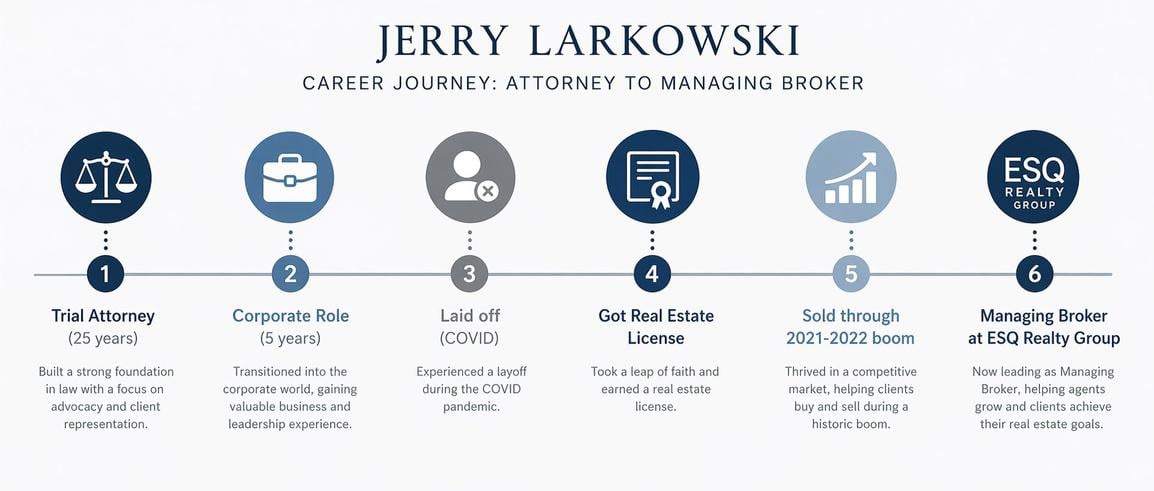
I sat down with Jerry Larkowski of ESQ Realty Group to understand what happens when a trial attorney of 25 years brings his courtroom scars into real estate. Jerry is a managing broker in the Little Rock real estate brokerage market and one of only four attorneys at a firm built by lawyers. His perspective changed how I think about every word I write.
Tune in to the podcast: https://youtu.be/i5nUMWPdgpU?si=1eeaWLof_xBd7sCp
Why I Had This Conversation
I started this podcast angry. When the NAR and DOJ lawsuits exploded, I felt profound disrespect toward what realtors do. But anger without action is useless. I realized the root problem is simple: no one understands real estate. Not how we practice it. Not why our work has value. Not how transfer taxes keep cities running.
The NAR commission lawsuit settlement terms changed everything for our industry. That is why I wanted to talk to someone who sees real estate through the lens of a courtroom. So I channeled that anger into conversations. I have spoken with the head of Compass, city planners, mayors, plumbers, and attorneys. Jerry Larkowski of ESQ Realty Group was exactly the guest I needed.
He is not just a broker. He is a trial attorney who burned out after 25 years of litigation. He saw people at their worst when deals collapsed. Now he applies that trauma to teach agents how to avoid becoming a lawsuit statistic. His X-ray vision into real estate contract language pitfalls real estate is a masterclass in defensive real estate. You can also read more about why realtors are facing lawsuits on my blog.
Core Insight #1: Think Like a Litigator Before You Need One
Here is what hit me hardest. Jerry does not just write contracts. He sees every line as potential evidence. He told me something I will never forget.
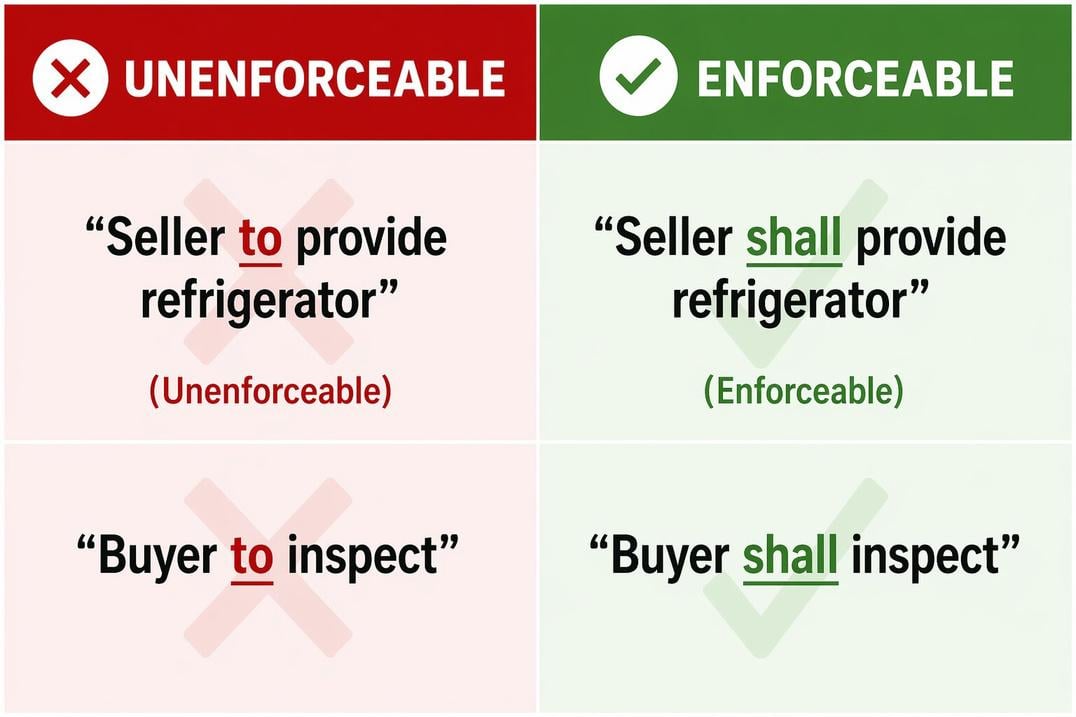
"There’s a bad habit among realtors: they write ‘seller to provide refrigerator at closing.’ ‘To’ is not a verb. Go look it up. You cannot enforce ‘to.’ I tell my agents: use ‘shall.’ ‘Seller shall provide refrigerator at closing.’ ‘Shall’ is directive. ‘Will’ is predictive. Try being a 29-year-old attorney standing in front of a judge who looks over his glasses and says, ‘Mr. Larkowski, what does that say?’ The whole courtroom gets quiet. And then I say, ‘It says I lose.’ I did lose that case. You learn more from losing than winning – but you don’t want to learn that lesson in front of a judge."
–
One word. That is the difference between getting the refrigerator and getting sued.
Jerry also warned me that even winning a lawsuit feels like losing. You lose time, energy, sleep, and part of your soul. The goal is never to get sued in the first place.
This aligns with the American Bar Association's findings on legal malpractice trends, which show that ambiguous contract language is a primary driver of disputes. For practical advice on avoiding these issues, Jerry shares tips for home sellers on legal disclosures on his firm's blog.
Core Insight #2: Dual Agency Is a Minefield, But It Can Be Done Ethically
I have always avoided double-ending transactions. The conflict of interest feels too big. But Jerry gave me a different view.
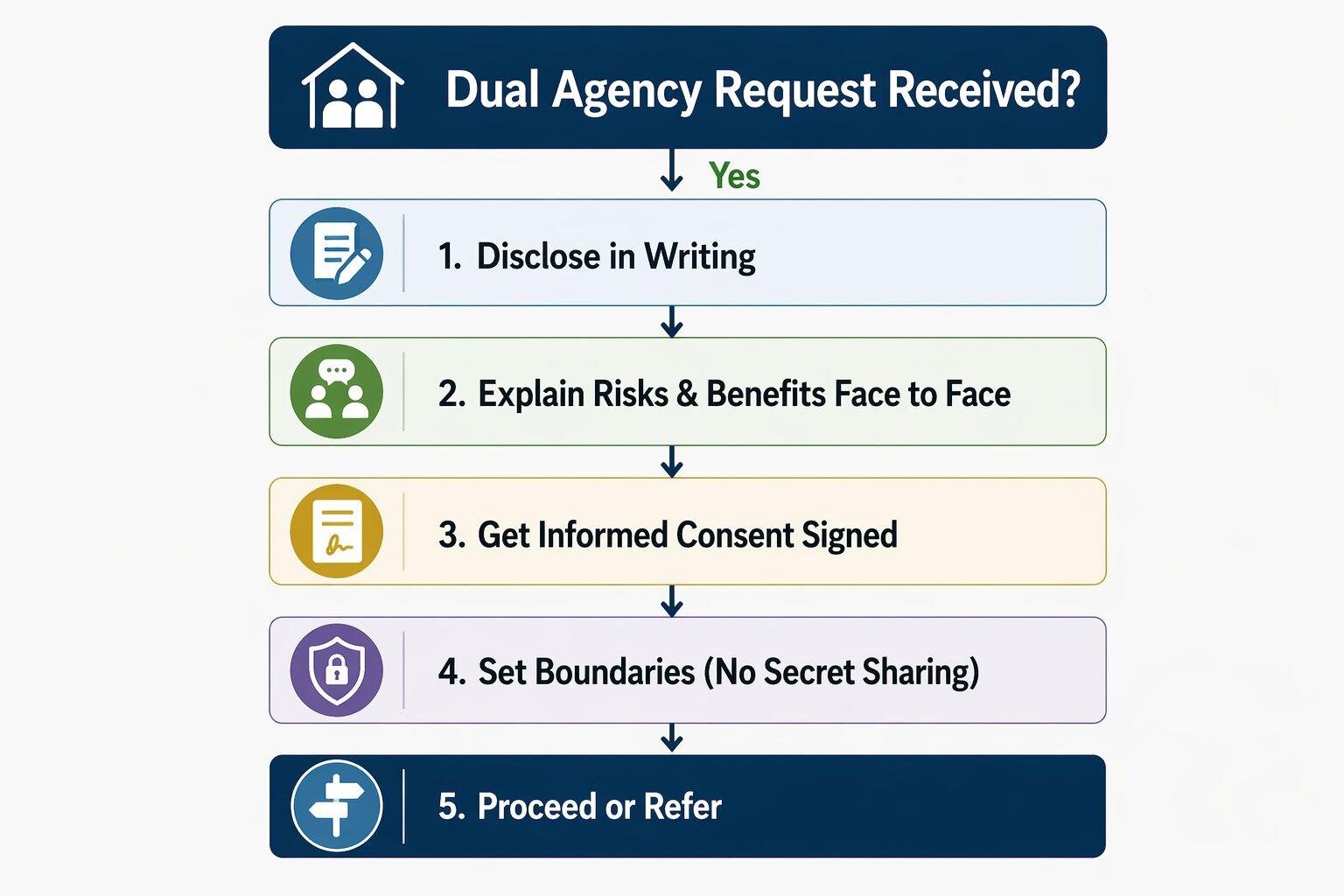
In Arkansas, dual agency ethics for realtors is a hot topic because the practice is legal and common. Jerry does it, but with extreme care. He resolves the conflict by focusing on one truth: the seller wants out, and the buyer wants in. Everything else is negotiable.
He tells both sides upfront: “I cannot tell you the other side’s secrets. But I will tell you what move you should make right now, even if I were not representing them.”
He over-explains. He looks clients in the eye. He does not just hand over a form. He talks through every line until they understand.
Some agents in his market refuse dual agency entirely. They refer buyer inquiries to another agent. Jerry respects that. The point is not which path you choose. The point is to be intentional, transparent, and ethical. You can see more of Arkansas real estate broker Jerry Larkowski's approach on his LinkedIn.
Core Insight #3: The Two Lawsuits That Kill Realtors (And How to Avoid Them)
I asked Jerry what lawsuits he sees most often. His answer was immediate: failure to disclose and square footage disputes.
"Failure to disclose is the big one. A realtor gets information that is critical to a transaction – maybe from an inspection, maybe from a seller conversation – and they either don’t turn it over to the client, or they brush it off. ‘Here, just sign this. No big deal.’ That’s a lawsuit waiting to happen. I ask my clients: ‘Do you have questions? Do you understand what this means? Do you know you can get advice from an attorney before you sign?’ Buying a house is not buying a toaster at Walmart. If you’re not making sure they understand, you’re not doing your job. And if you’re not doing your job, you don’t belong in this business."
–
Jerry’s fix is simple but rare. He asks clients if they have questions. He asks if they understand real estate lawsuits and disclosures. He reminds them they can get legal advice. That extra minute of care separates a closed deal from a deposition. For more on failure to disclose in real estate, I have covered this in detail before.
Square footage disputes are trickier because measurements vary. Jerry’s rule is documentation. Write down everything. Every conversation. Every client concern. Every time you explained something.
He coined a phrase during a call with his insurance agent: “Type not that which you do not want read back to you.”
The North Carolina Association of REALTORS has identified that failure to disclose a material fact is the number one reason why agents are disciplined, and Jerry confirmed this is a primary source of lawsuits in his experience. Failure to disclose and measurement errors consistently rank among the top complaint categories. Jerry also warns that certain property types carry extra legal risk, such as foreclosure purchase legal risks, which he has written about for buyers.
Core Insight #4: The Conductor of the Orchestra
Jerry gave me an analogy I am stealing for every future conversation about what realtors actually do.
A real estate agent is like a conductor of an orchestra. You have the buyer’s agent, listing agent, title company, surveyors, termite inspectors, lenders, and more. Each one wants to play. But they cannot all play at once.
The conductor says, “No, we are not ready for that yet. I need more from the horn section. Then we can bring you in.”
That is exactly what a good agent does. They sequence the transaction. They know when to bring in the inspector and when to wait for the appraisal. They keep everyone moving in the right direction without stepping on each other.
We are project managers, negotiators, and realtor legal protection strategists who keep clients out of court. As the National Association of REALTORS® explains, proactive risk management is essential. Real estate practices vary significantly across the country, including state-by-state real estate transaction differences.
What Changed for Me After This Conversation
"I was a trial attorney for 25 years. That kind of work wears on you. At the 25-year point, I was approaching burnout. COVID hit, I got laid off, courthouses were closed, and I was sick of the courthouse anyway. So I started selling real estate. And here’s what I brought with me: the ability to see, 18 months in advance, that something I write or say today could be read back to me as an exhibit. I tell every agent I mentor: document everything. Write down every conversation. And remember – even if you win the lawsuit, you lose. You lose days, weeks, months. You lose a part of your soul. The goal isn’t to win cases. The goal is to never get sued in the first place."
–
Here is what I am walking away with.
I started this podcast because I was angry about how the public views realtors. But Jerry reminded me that some criticism comes from within our own industry. When realtors fail to disclose, write sloppy contracts, brush off client questions, or treat six-figure transactions like toaster purchases, we deserve to be called out.
The solution is not just defending our values. It is actually earning it. That means documenting everything. Using precise language. Explaining until the client truly understands. Treating every transaction like it could end up in front of a judge. Because it might.
I am also rethinking dual agency. I have always avoided it. But Jerry showed me that with extreme transparency and ethical discipline, it can work. I am not sure I will change my practice, but I have a much deeper respect for agents who do it the right way.
And I am borrowing his conductor analogy. That is the story I will tell from now on when someone asks me what realtors actually do. Jerry Larkowski of ESQ Realty Group gave me a gift: permission to slow down, to write carefully, and never to assume a client understands something just because I said it once.
Want to hear my entire conversation with Jerry Larkowski of ESQ Realty Group on how one word in a contract can trigger a lawsuit and why most realtors don't think like litigators until it's too late? Listen to the full episode of the REalizations Podcast.
FAQ Section
1. What is the most common mistake realtors make that leads to lawsuits?
Failure to disclose material information and sloppy contract language. Jerry Larkowski of ESQ Realty Group emphasized that many realtors receive critical information about a property and either do not pass it to the client or downplay it. Also, using weak language like “seller to provide” instead of “seller shall provide” can make contract terms unenforceable.
2. How can I protect myself legally as a realtor without being an attorney?
Document everything. Write down every client conversation. Use precise, enforceable language in contracts. Never brush off a client’s question with “just sign here.” Remind clients they can seek legal advice. And remember Jerry’s rule: “Type not that which you do not want read back to you.” Every email and text could become evidence.
3. Should I ever represent both the buyer and seller in a transaction?
Only if you are willing to over-communicate, get written informed consent, and maintain absolute trust with both parties. You cannot share confidential information from one side to the other. Jerry does it successfully by focusing on the shared goal (seller wants out, buyer wants in), but many ethical agents choose to refer buyer inquiries to another agent instead. Either path is fine as long as you are transparent.
Apply as a Guest on the REalizations Podcast
Real estate is misunderstood. Lawsuits are rising. And the gap between what we actually do and what the public thinks we do is hurting our entire profession.
If you are actively working in real estate, law, development, finance, or construction, and you have real insights about how to practice better, avoid lawsuits, or serve clients with integrity, I want to hear from you. This is not a place for generic advice. I want guests who have been in the trenches, made mistakes, learned hard lessons, and come out the other side with wisdom to share.