
Real estate risk management isn't just about avoiding lawsuits. It's about protecting your clients, your business, and your reputation every single day.
I learned this firsthand when I hosted Daniel Hershkowitz on my podcast. Daniel is the Senior Director of Risk Management at The Agency. He's been a real estate attorney, an agent, and now helps hundreds of agents navigate the increasingly complicated world of real estate risk.
During our conversation, Daniel shared some stories that stuck with me. Like the agent who called about disclosure obligations for a dead body found under a house. Or the mother-son team that tried to strong-arm buyers into dual agency.
These aren't just entertaining stories. They're warnings.
They show how quickly a deal can go sideways when you don't have proper risk management systems in place.
In this guide, I'll walk you through everything I've learned about real estate risk management. You'll get practical, real-world advice from someone who's seen it all.
Or if you prefer listening, you can also watch my conversation with Daniel on the REalizations Podcast. We dive deep into dual agency nightmares, commission lawsuit implications, and his best advice for new real estate agents to protect them from risk while navigating today's market.
Get a quick look. Watch the highlights from this conversation:
What Is Real Estate Risk Management?
Real estate risk management is how you identify, assess, and reduce risks in your business. It covers six main areas:
|
Risk Category |
What It Covers |
|
Personal Safety |
Staying safe during showings, open houses, and client meetings |
|
Legal & Compliance |
Fair housing laws, disclosures, contracts, and licensing rules |
|
Transaction Risks |
Missing documents, timeline mistakes, financing issues, inspection surprises |
|
Financial Risks |
Commission disputes, fraud, market shifts, and deal-impacting economic changes |
|
Reputation Risks |
Online reviews, client complaints, and public perception |
|
Cybersecurity |
Email compromise, wire fraud, hacking, and data breaches |
|
Property / Physical Risk |
On-site hazards, unsafe conditions, and unexpected physical dangers |
As Senior Director of Risk Management, Daniel, put it during our podcast:
"My job is to teach, problem solve, and entertain. The more complicated the craziness gets out there, the more I'm needed."– Daniel Herskowitz, Senior Director of Risk Management, Agency Real Estate
And honestly, things are getting more complicated. The NAR commission settlement came out of a federal lawsuit arguing that the old commission structure inflated home prices and cut buyers out of any say over agent fees.
Now, agents are required to have signed buyer agreements before showing homes. Fair housing enforcement is stricter.
So you need systems. Not just knowledge.
Real Estate Agent Risk Management Training
Training is where most brokerages fail. They do a one-time session during onboarding, then nothing.
That's not enough. Risk management needs to be ongoing.
Here's how I structure training based on what Daniel taught me and what I've seen work:
New Agent Onboarding (Week 1-2)
Your new agents need to understand risk from day one. Cover these topics in their first two weeks:
|
Topic |
What It Is & Why It Matters |
|
Fiduciary Duty |
Your legal and ethical obligation to act in your client’s best interest, protecting them from harm and financial loss |
|
Laws that prevent discrimination and protect equal access to housing, with serious legal consequences if violated |
|
|
Knowing what material facts must be shared to prevent lawsuits, fines, and broken trust |
|
|
Contracts that clarify roles, compensation, and expectations, reducing confusion and disputes |
|
|
Practices that protect agents from physical danger during showings and meetings |
|
|
Wire Fraud Awareness |
Understanding how scams target transactions to steal funds and how to prevent them |
Monthly Refreshers (30-45 Minutes)
You can run these on the first Tuesday of every month. Pick one topic and go deep:
-
January: Fair housing scenarios
-
February: Inspection issues and negotiations
-
March: Dual agency and conflicts of interest
-
April: Wire fraud case studies
-
May: Disclosure obligations and tricky situations
-
June: Timeline management and transaction coordination.
Deal Debriefs (Post-Close Learning Loop)
After every closed deal, ask three questions:
- What risk did we identify early?
- What surprised us?
- What would we do differently?
This creates a learning culture. Your team gets better with every transaction.
Showing & Open House Safety Checklist
Personal safety is the first layer of real estate risk management. The NAR safety guidelines are comprehensive, but here's what I actually use:
Before the showing:
|
During the showing:
|
After the showing:
|
I've been doing this for 26 years. I've never had a serious safety incident. But I've also never been careless.
So make sure you practice this checklist before showing a house to potential clients.
Transaction Risk Checklist
As Senior Director of Risk Management at The Agency, Daniel reviews complaints every single day. He told me about an agent who worked with buyers for four months, showed them a property three times, and then the mother jumped in and wrote the offer.
"I reviewed this morning a complaint that one of our agents is going to be making against another broker, right. And it was the mother who stepped in after four months. Right after they had seen the property three times, right. And then she jumped in and wrote the offer."– Daniel Herskowitz, Senior Director of Risk Management, Agency Real Estate
That's a transaction risk. Specifically, a commission dispute risk. If you want to protect you (and your clients) from such risks, you need to be mindful of the following:
Documentation risks:
-
☐ Missing or incomplete buyer broker agreement
-
☐ Unsigned disclosures
-
☐ Unclear repair agreements
-
☐ Missing HOA documents
-
☐ Incomplete seller's disclosure
-
☐ Suspected use of forged documents
Timeline risks:
-
☐ Inspection contingency deadlines missed
-
☐ Loan approval delays
-
☐ Appraisal ordered too late
-
☐ Title issues discovered late
-
☐ Repair work not completed on time
Financing or transactional risks:
-
☐ Buyer's employment changes mid-transaction
-
☐ Lender changes requirements
-
☐ Appraisal comes in low
-
☐ Interest rate lock expires
-
☐ Buyer makes large purchases before closing
-
☐ Financing comes from an unusual or unknown source
Red flags that require escalation:
-
Buyer or seller stops responding to calls/texts
-
Attorney gets involved and rewrites all forms
-
New liens appear on title
-
Inspection reveals major undisclosed issues
-
Buyer wants to move in before closing
These are what blows up most closings.
When you spot these red flags, escalate immediately. Don't wait. Don't hope it resolves itself. Document everything, and don’t hesitate to walk away from a deal that no longer makes sense.
Compliance Risks Agents Can’t Ignore
Fair housing is non-negotiable. As part of the Board of Directors of the Association of Realtors in Oakland, and as a real estate agent for 26 years – I've been trained on this for decades. So has Daniel.
The Fair Housing Act protects seven classes: race, color, religion, sex, national origin, familial status, and disability.
Many states add more protections. Know your local laws.
What you CAN'T do:
-
Steer clients toward or away from neighborhoods based on protected classes
-
Treat similar clients differently in any aspect of service
-
Refuse to show properties based on protected classes
-
Make assumptions about what clients can afford
What you SHOULD do:
- Let clients tell you their preferences
- Provide objective data about neighborhoods (schools, commute times, amenities)
- Document all client conversations
- Treat everyone with equal professionalism
- When in doubt, ask your broker or risk manager
Daniel emphasized this during our podcast:
"We don't have customers. We have clients. Their interests come ahead of ours."– Daniel Herskowitz, Senior Director of Risk Management, Agency Real Estate
That fiduciary duty extends to fair housing. Always.
Wire Fraud & Cybersecurity Risk Management
Wire fraud is exploding. I see attempted scams on almost every transaction now.
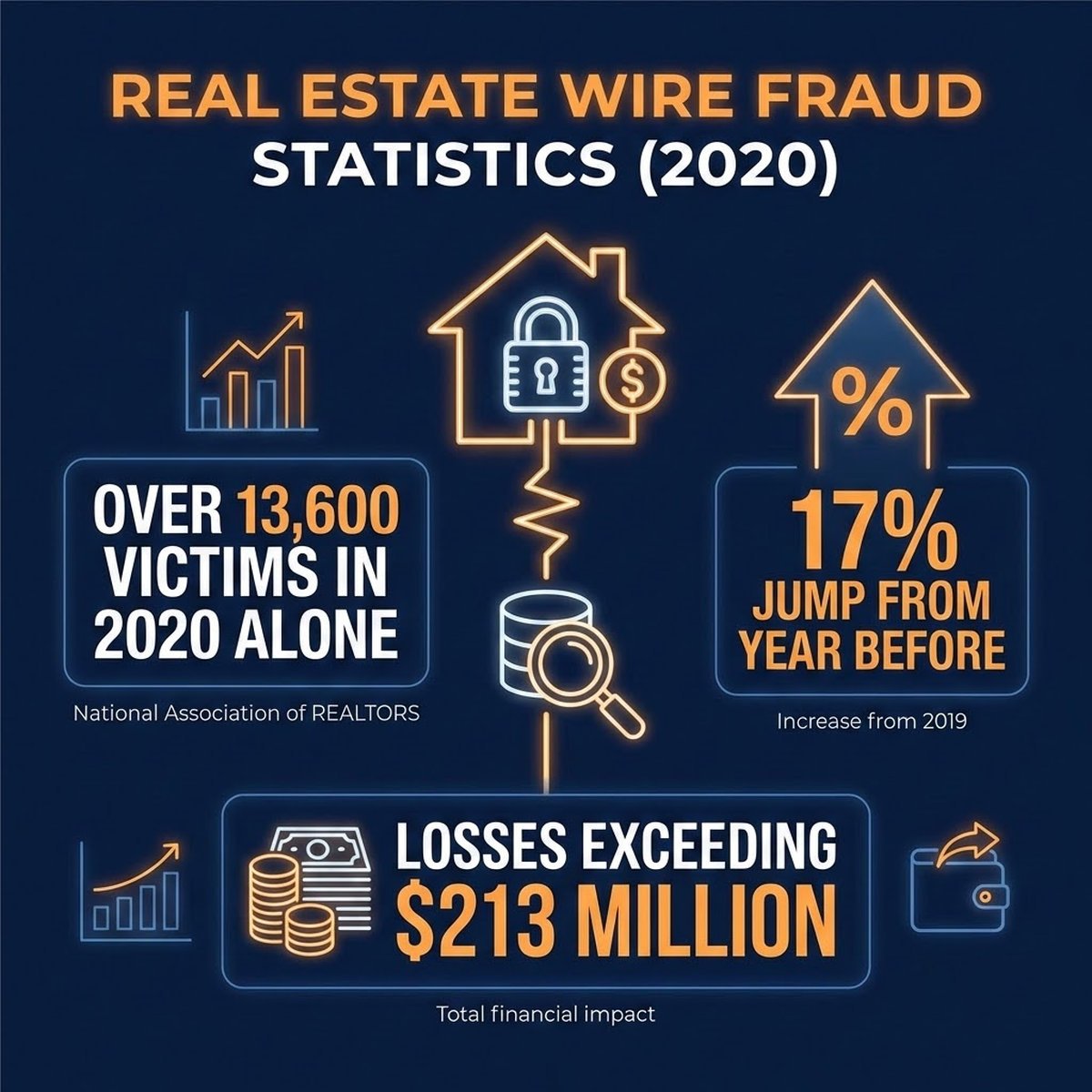
According to the National Association of REALTORS, over 13,600+ real estate wire fraud victims in 2020 alone. That's a 17% jump from the year before, with losses exceeding $213 million.
Here's how it works: Scammers compromise email accounts. They monitor conversations. Right before closing, they send fake wiring instructions that look identical to the real ones. The buyer wires $500,000 to a criminal account. The money is gone.
Prevention checklist for agents:
-
☐ Use multi-factor authentication on all email accounts
-
☐ Never send wiring instructions by email
-
☐ Verify all email addresses before replying
-
☐ Look for subtle email address changes ([email protected] vs [email protected])
-
☐ Call to verify any changes to wiring instructions using a known phone number
WIRE FRAUD VERIFICATION SCRIPT
|
"Before you wire any funds, please follow these steps:
Wire fraud is common in real estate. This extra step protects your money. No legitimate title company will rush you through this verification." |
Share this script with every buyer. Print it. Email it separately. Make it part of your process.
The NIST Cybersecurity Framework provides additional guidance for small businesses.
Natural Hazard Risk Checks Agents Can Do in 10 Minutes
Property risk includes natural hazards. Your clients need to know what they're buying into.
Here's what I check on every listing:
|
Hazard Type |
Tool to Use |
What to Document |
|
Flood risk |
Zone designation, insurance requirements |
|
|
Earthquake |
Local geological survey maps |
Fault proximity, liquefaction zones |
|
Wildfire |
State fire hazard severity maps |
Risk level, defensible space requirements |
|
Hurricane/Wind |
NOAA storm history |
Windstorm insurance requirements |
|
Radon |
Zone level, testing recommendations |
This isn't optional anymore. Buyers are sophisticated. They ask questions. If you haven't done your homework, they'll find an agent who has.
Best Practices for New Real Estate Agents: How to Manage Risk From Day One
Sign Your Buyer-Broker Agreement
When I asked Daniel what new agents should focus on, his answer surprised me.
"One of the things that a new realtor has a real advantage over a realtor who's been doing this for 30 years is they're not in the least bit intimidated by the idea of signing a buyer broker agreement."– Daniel Herskowitz, Senior Director of Risk Management, Agency Real Estate
What is a buyer-broker agreement?
It's a written contract that formalizes the relationship between a buyer and their agent. Think of it like a listing agreement, but for buyers.
After the Sitzer commission lawsuits, these agreements went from optional to essential.
Daniel gave a perfect example. Picture a couple working at Google. They're buying a $3.5 million house. High earners, but not a lot of cash on hand.
"They would actually be very skeptical of the concept that they're going to start entering into this relationship with you without something in writing. It would seem weird to them. What do you mean there's no writing?"– Daniel Herskowitz, Senior Director of Risk Management, Agency Real Estate
Understand Fiduciary Duty (It's Non-Negotiable)
According to Daniel, prioritizing the interests of your clients is a legal obligation.
Here's what it means practically:
|
Situation |
Wrong Approach |
Right Approach |
|
You love a listing you have |
Make an offer yourself |
Refer to another agent, full disclosure |
|
Client asks if neighborhood is "safe" |
Answer with opinion |
Provide crime data, let them decide |
|
You'd earn more on property A than B |
Steer toward higher commission |
Present both, explain pros/cons objectively |
The pattern is simple: your client's interests always come first. When you can't serve their interests without conflicting with your own, you step aside.
A Repeatable Workflow: The 5-Step Risk Review for Every Listing and Buyer
Daniel's approach to risk management is systematic. He doesn't just react to problems. He prevents them.
Here's the workflow I use based on his teaching:
Step 1: Identify risks
Before you list or show a property, spend 15 minutes identifying:
-
People risks (safety, dual agency potential)
-
Deal risks (financing, timeline, documentation)
-
Property risks (condition, hazards, disclosures)
Step 2: Document and disclose appropriately
Everything in writing. Everything timestamped. Everything disclosed when required.
Daniel told a story about an attorney-client who signed two listing agreements:
"I did have a situation myself very recently where a client who is an attorney signed a listing agreement with another agent never canceled it. And three months later signed a listing agreement with me without telling me that he had done so."– Andrea Gordon, Host of Realizations Podcast
The client thought a phone call canceled the first agreement.
It didn't. Proper documentation would have prevented that mess.
Step 3: Mitigate
Once you identify risks, reduce them:
-
Unsafe property? Hire a security service for the open house
-
Timeline tight? Build in buffer days
-
Complex financing? Get a pre-approval from a reputable lender
-
Property condition issues? Get estimates before listing
Step 4: Communicate
Set expectations early. Daniel mentioned that buyer broker agreements force conversations about compensation. That's good.
Force conversations about everything:
-
Timeline and contingencies
-
Repair negotiations
-
Inspection expectations
-
Market conditions
Step 5: Review and improve
After closing, debrief. What went well? What was risky? What would you change?
This creates a continuous improvement loop. You get better with every transaction.
FAQs
What is property risk in real estate?
Property risk includes natural hazards (floods, earthquakes, wildfires), environmental issues (radon, lead, asbestos), condition problems (foundation, roof, electrical), and location factors (crime, noise, zoning) that could cause financial loss or legal liability.
What insurance should a real estate agent consider?
Most agents carry Errors & Omissions (E&O) insurance, general liability insurance, and cyber liability insurance. Your brokerage may provide some coverage, but verify what's included and consider additional personal coverage. Consult an insurance professional for your specific needs.
How do brokers structure risk management training?
Effective brokers use a three-part approach: comprehensive onboarding (week 1-2 for new agents), monthly topic-specific refreshers (30-45 minutes), and post-transaction debriefs to create a continuous learning culture. The key is making it ongoing, not one-time.
What's the #1 preventable transaction risk?
Missing or incomplete buyer broker agreements cause the most commission disputes and legal issues. Since the NAR settlement, having a signed buyer broker agreement before showing properties is both required and essential for protecting your commission and clarifying your relationship with buyers.
Real Estate Risk Management Isn’t Complicated. It’s Just Systematic.
You identify risks before they become problems. You document everything. You communicate clearly. You learn from every transaction.
Daniel's career path shows the value of expertise in real estate risk management. He went from attorney to agent to risk manager because he saw how complicated our industry really is. The agents who succeed are the ones who take risk seriously.
Start with one area. Maybe it's showing safety. Maybe it's transaction documentation. Maybe it's wire fraud prevention.
Pick one. Get good at it. Then add the next layer.
That's how you build a sustainable, protected real estate business. That's how you serve your clients well. And that's how you sleep well at night knowing you've done everything right.
If you want to hear more insights like these from industry experts, tune into my REalizations Podcast where perceptions meet reality.
And if you're in the Bay Area and need guidance on your real estate journey, I'm here to help. Let's navigate these hidden hazards together.
This podcast is produced by the Icons of Real Estate — #1 Real Estate Podcast Network.
Apply to Be a Guest on the REalizations Podcast
If you serve the real estate industry through staffing, lending, brokerage, technology, or advisory, and help agents grow smarter, not harder…
Let's spotlight your insights.
Apply to be featured on the Realizations Podcast.