Building a luxury home in the Bay Area isn't just about choosing marble countertops and floor-to-ceiling windows. You have to navigate a complex landscape of permits, timelines, craftsmanship, and costs that can make or break your dream home vision.
I recently sat down with Devon Vought, president of Vought Construction, to discuss what it really takes to build luxury homes in our challenging Bay Area market.
What he shared changed how I think about luxury home construction in the Bay Area—Whether you're exploring luxury home construction Bay Area options or specifically researching luxury home construction San Francisco projects, understanding these realities will save you time, money, and frustration.
🎬 Get a quick look. Watch the highlights from this conversation:
▶️ Ready to go deeper into how Devon overcomes the challenges of luxury home building? Watch or listen to the full episode:
What Defines Luxury Home Construction
Luxury home construction goes far beyond square footage or price tag. It's about creating something entirely unique for each client.
As Devon explained:
"When you're building custom, everything is new. Every project you're building something for the first time." - Devon Vought, President, Vought Construction
Custom Architecture and Design
True luxury means custom everything. Devon's team builds elaborate custom pieces—from one-of-a-kind fireplaces to bespoke kitchen islands—that may never be replicated again.
"We build very elaborate custom pieces... we have to invest in the learning curve for every project... figuring things out that I may never do again." - Devon Vought, President, Vought Construction
This approach requires extraordinary attention to detail.
"I got really good at just details. I'm very detail-oriented and just really good working with the architects," he noted.
Premium Materials and Craftsmanship
BillionFire notes that across luxury home construction companies, the defining traits of a high-end home are premium materials and exceptional craftsmanship.
In markets like the Bay Area, achieving that standard requires careful sourcing amid unique supply constraints.
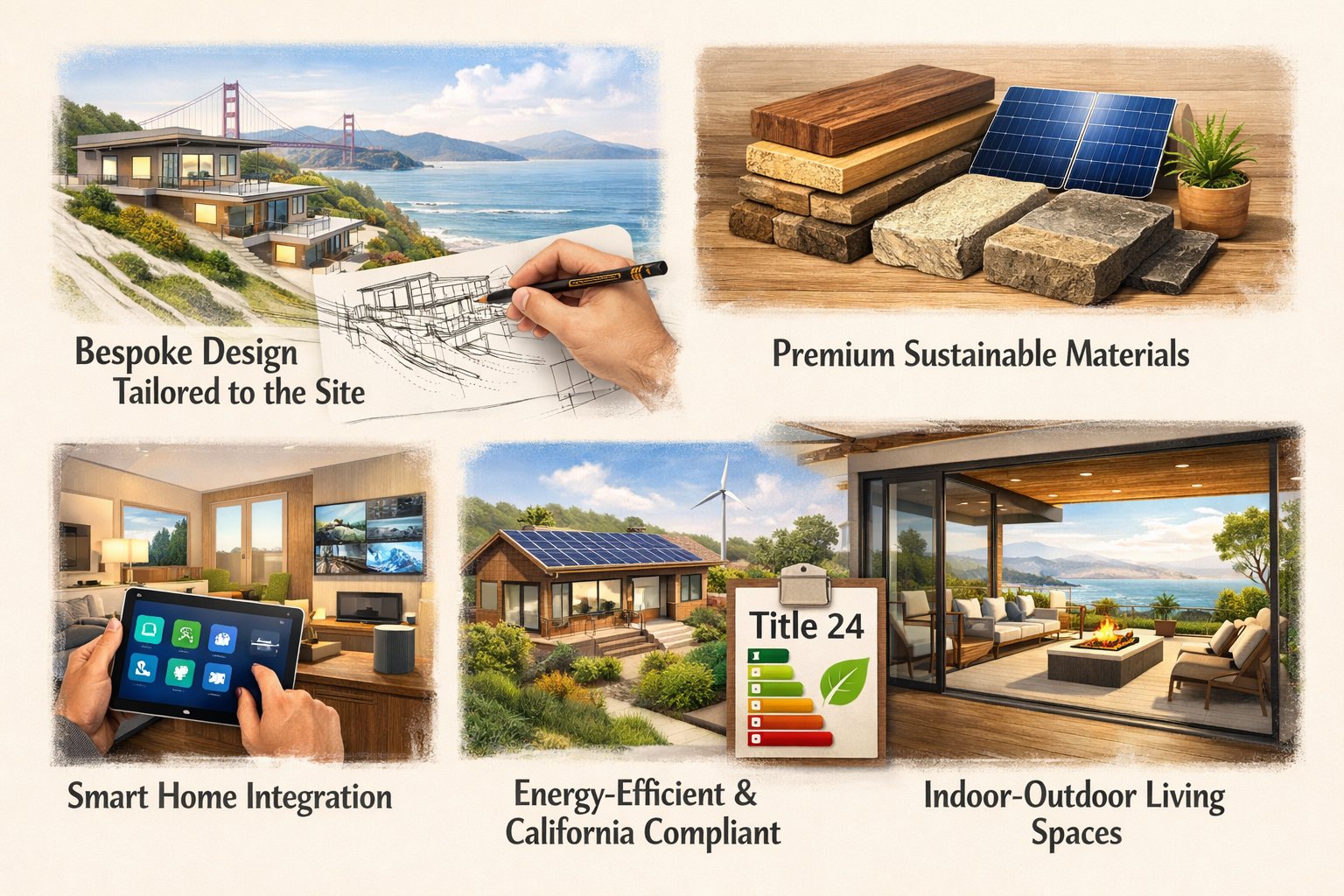
Key Features of Bay Area Luxury Homes:
-
Bespoke architectural elements tailored to the site
-
Premium sustainable materials
-
Smart home integration systems
-
Energy-efficient design meeting California's strict standards
-
Indoor-outdoor living spaces maximizing views
Luxury Home Construction in San Francisco vs the Greater Bay Area
Luxury home construction San Francisco projects face unique challenges compared to other luxury home construction Bay Area cities like Berkeley, Oakland, or the Peninsula. Each city brings its own regulatory maze.
Navigating Permits and Timelines
Devon works extensively in Berkeley, where he faces an Administrative Use Process (AUP) that takes 8-10 months just for planning—before permitting even begins.
Devon explained,
"In Berkeley... the administrative use process takes anywhere from 8 to 10 months... and that's just the planning process. Permitting can take a year or more," - Devon Vought, President, Vought Construction
San Francisco presents different challenges. I've personally witnessed corruption at planning desks and dealt with "expediters" who charge exorbitant fees to move projects forward.
El Cerrito, by contrast, offers a more collaborative experience. I once helped a client permit a non-conforming ADU that any other city would have required demolished. The El Cerrito planning department worked with us to find solutions.
Urban vs Suburban Considerations
|
Location |
Key Regulatory Challenges |
Notable Advantages |
|
San Francisco |
Complex planning reviews & lengthy processes |
Urban amenities & cultural institutions |
|
Berkeley |
Administrative Use Permit & community review |
|
|
Oakland |
Inconsistent guidance, infrastructure complexity |
Broad range of housing types and development patterns |
|
Peninsula Cities |
Strict design controls in certain cities |
Low-density residential character with large lots |
Why Work With a Luxury Home Construction Company
Avoid Costly, High-Risk Decisions
Luxury projects come with higher stakes, where hidden conditions can quickly turn into six-figure problems. An experienced luxury builder helps clients evaluate those risks before committing to a path that looks cheaper on paper. That risk shows up most often in remodels.
Devon shared a remodel near the Claremont Hotel where engineers later determined the home needed a completely new foundation—an unexpected $200,000 cost.
Get Clarity in a Complex Process
Luxury homes demand precision and predictability. And luxury construction company brings clarity to every stage of the build.
“With new construction though, you've got a set of plans, you have a piece of dirt. This is why I always say it's very hard to sell vacant lots because you can't envision it. But I can see exactly what's going to be there. I can see the finished product, and it's great to see that come to fruition.” - Devon Vought, President, Vought Construction
Devon shares real-time progress photos so clients—many living out of state or abroad—can follow their home’s progress with confidence.
Protect Your Budget by Starting Early
The most expensive mistakes often happen before construction starts. Luxury builders know how to prevent them.
“Get us involved very early. Don’t do all the plans and get it permitted, then call us. Get us out there early.” - Devon Vought, President, Vought Construction
Early involvement allows builders to flag issues, adjust scope, and align budgets before clients spend tens of thousands on plans that may need to change.
The Luxury Custom Home Construction Process
Luxury custom home construction in the Bay Area follows a specific pathway. Here's what to expect:
Step 1: Evaluate Topography Before You Buy
Land topography is one of the biggest non-design cost drivers. According to Homeguide, excavation costs range from $2.50 to $15 per cubic yard nationally, but in California reach $15 to $40 per cubic yard. Devon spent $160,000 just removing dirt from upslope spec lots in Montclair.
At this step, you need to:
-
Order a geotechnical report before buying ($700-$3,200)
-
Understand soil type, slope, drainage, and access
-
Calculate dirt removal costs ($140 to $180 per ton)
According to Homeguide, on average, excavation can cost between $1,100 to $5,600, but on maximum can get up to $20,000. See the table below.
|
National Average Cost |
$3,500 |
|
Minimum Cost |
$500 |
|
Maximum Cost |
$20,000 |
|
Average Range |
$1,100 to $5,600 |
Source: Homeguide, How much does excavation cost?
Step 2: Assemble Your Team in Reverse Order
Engage your builder before finalizing architectural plans. Since architectural design runs 10-15% of total costs, according to Golden State Design & Engineering. Then, having builder input upfront prevents expensive redesigns later.
At this step:
-
Schedule builder consultation during initial site visits
-
Conduct pre-construction meetings for realistic budgets
-
Understand material lead times (6-12 months for custom elements)
-
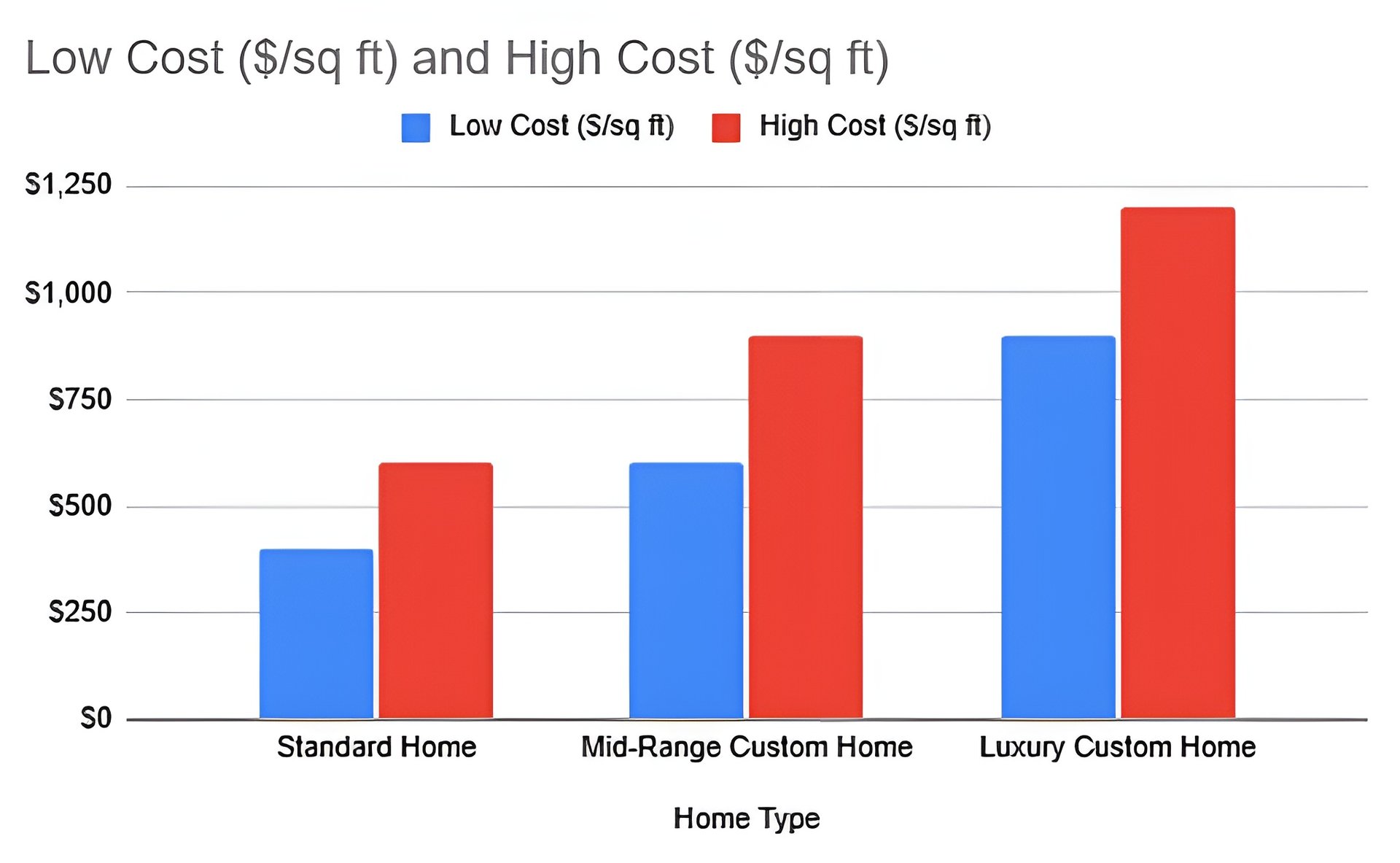
Get preliminary cost estimates ($900-$1,200+ per sq ft) - See the breakdown by Marin Builders Association on new residential construction costs, below.
|
Home Type |
Low Cost ($/sq ft) |
High Cost ($/sq ft) |
|
Standard Home |
$400 |
$600 |
|
Mid-Range Custom Home |
$600 |
$900 |
|
Luxury Custom Home |
$900 |
$1,200+ |
Step 3: Design With Regulatory Reality in Mind
Bay Area permitting is a major cost driver. According to Marin Builders Association, permitting and soft costs add 15-40% above hard construction costs in California (highest in the nation).
Because regulatory review directly impacts cost, schedule, and scope, your design strategy needs to factor in permit approval from day one.
Your architect needs to possess deep regulatory fluency, alongside exceptional design talent.
So when hiring one, you must look for:
-
Proven track record with local projects in your target city
-
Active relationships with planning departments
-
Experience navigating Title 24 energy code
-
Builder collaboration during design development
At this step, you need to:
-
Request examples of past permitted projects in your city
-
Ask how they streamline the approval process
-
Build permit timeline into your overall schedule
Step 4: Budget 2-12 Months for Permits and Approvals
According to Permit Flow, it takes about 2-12 months to get a building permit in San Francisco, a highly regulated jurisdiction in the Bay Area. And the permits cost 0.5%-2% of the total construction cost, according to Golden State Design & Engineering.
But that's the optimistic timeline. Projects in Bay Area might get delayed due to neighbor appeals.
"The cities are getting rough to deal with. And in these neighborhoods, the neighbors have... too much power." — Devon Vought, President, Vought Construction
To avoid permit delays, you must:
-
Attend neighborhood meetings proactively
-
Document all planning department interactions
-
Build timeline buffers (if quoted 6 months, budget 9-12)
Step 5: Lock In Pricing Before Market Volatility Hits
Construction costs rise and fall unpredictably. According to JDJ Consulting, California construction costs rose 6% in Q1 2025, with residential costs surging up to 44% over five years. Devon experienced 280% lumber increase while framing houses during the pandemic.
As Devon Vought explains:
“We just reach out to the vendors, and we try to get everybody locked in. That's what we've been doing for a couple of projects that haven't even started right now. We're trying to lock in prices..." — Devon Vought, President, Vought Construction
When material and labor markets fluctuate, the projects that stay predictable are the ones that secure pricing early.
Where Volatility Shows Up First
Labor costs shift with demand, union adjustments, and backlog pressure. Locking in trade agreements early helps protect against rate increases like these:
Here’s what you can expect in terms of labor costs, according to JDJ Consulting:
|
Trade |
Typical Hourly Rate |
|
Electricians |
$45–$75 per hour |
|
Plumbers |
$50–$85 per hour |
|
Concrete Workers |
$35–$55 per hour |
|
Carpenters |
$40–$65 per hour |
Where Your Budget Is Most Exposed
Understanding how your total budget is allocated reveals which categories are most sensitive to market swings.
According to Haute Living, your budget is distributed to these different categories.
|
Budget Category |
Estimated Share of Total Project Cost |
What’s Included |
|
Land & Site Work |
15%–25% |
Property purchase, surveying, demolition, grading, excavation, utility connections |
|
Architecture & Engineering |
8%–15% |
Design development, construction drawings, structural engineering, interior planning, and permit fees |
|
Core Construction Costs |
50%–60% |
Structural framing, foundation, roofing, mechanical systems, electrical, plumbing, HVAC |
|
Finishes & Exterior Enhancements |
10%–25% |
Flooring, cabinetry, countertops, fixtures, appliances, lighting, exterior detailing, landscaping |
|
Contingency Reserve |
10%–20% |
Scope changes, unforeseen conditions, material price fluctuations, and discretionary upgrades |
Notice that over half of the budget sits in construction hard costs — the category most directly impacted by labor and material volatility.
How to Protect Your Project
To reduce exposure to future increases, you must:
-
Execute pre-construction agreements with price lock provisions
-
Pre-purchase long-lead materials such as appliances, steel, and specialty finishes
-
Secure vendor storage arrangements when necessary
-
Build a realistic contingency reserve into your budget
The goal is not to predict the market. It’s to remove as much uncertainty as possible before ground breaks.
Step 6: Expect 12-18 Months of Active Construction (But Plan for 2-4 Years Total)
Luxury home construction in the Bay Area is a marathon, not a sprint. Here's the realistic timeline and how to stay in control.
According to Marina Builders Association, active construction runs 12-18 months at $900-$1,200+ per square foot. It breaks down into three phases: (1) Site prep/Foundation (2) Framing (3) Finishes.
"With new construction, you see a lot happening fast... you have a set of plans, you have a piece of dirt, and I can see exactly what's going to be there." — Devon Vought, President, Vought Construction
You must stay actively involved during construction:
-
Schedule weekly site visits during critical phases
-
Document everything photographically
-
And maintain 10-15% contingency for field conditions
Visibility will prevent surprises. And problems caught early will cost less to fix.
But take note that the full journey might take longer. From land purchase to move-in, expect 2-4 years depending on scope.
As per Devon Vought:
"That is what you should wrap your mind around: 3 years. If you’re trying to build your dream home... get your head wrapped around 3 years and hope that nothing comes up." — Devon Vought, President, Vought Construction
Before you move in:
-
Conduct a comprehensive punch-list walkthrough to identify incomplete or corrective items before final payment.
-
Obtain Certificate of Occupancy
-
Plan for early post-occupancy adjustments during the builder’s warranty period, as minor corrections are common after move-in.
Choosing the Right Luxury Home Construction Company
According to Modern Home Builders, the nation's top luxury home construction companies share common traits: architectural excellence, superior craftsmanship, and transparent communication.
Essential Questions to Ask
About Their Process:
-
How early should I involve you in the design process?
-
How do you handle unexpected site conditions or costs?
-
What's your typical timeline for a project like mine?
About Market Conditions:
-
How are you managing tariff and supply chain risks?
-
Do you lock in vendor pricing? How far in advance?
-
What payment structure do you use?
About Communication:
-
How often will I receive updates?
-
Who is my primary point of contact?
-
How do you handle change orders?
Portfolio and Past Projects
Request to see completed Bay Area projects similar to your vision. Devon's work can be viewed at Vought Construction.
Look for builders experienced with your specific city's permitting process. Someone who builds primarily in Marin will face a steep learning curve in Berkeley.
Setting Realistic Timelines and Expectations
The Three-Year Reality
This timeline includes:
-
2-12 months for design and permits
-
12-18 months for construction
-
3-6 months for unexpected delays
(Note: Bay Area permitting and site challenges often add to these ranges.)
Devon shared a cautionary tale: permits for his Skyline project took two full years because neighbors repeatedly appealed. The lot had already defeated two previous buyers before his current clients succeeded.
The Neighborhood Challenge
"The neighbors just tied it up. And this was the third person that bought that lot of land because the neighbors ran the other two off," Devon explained.
The Vision That Sustains You
Despite challenges, Devon remains optimistic about what's possible:
"It's a little bit hard, but you really can get everything you want out of a home... if you can persevere and wait, you really can get everything you desire."
This is the mindset luxury homebuyers need.
FAQs About Luxury Home Construction in the Bay Area
How long does luxury home construction take in the Bay Area?
Plan for 3+ years from lot purchase to move-in for fully custom builds. Custom projects with extensive client involvement typically take longer due to design decisions and permit complexities.
Is luxury home construction more expensive in San Francisco than other Bay Area cities?
Yes, generally. San Francisco presents higher land costs averaging from $50,050 - $467,750, with higer end being $950. This is due to more complex permitting. However, cities like Berkeley and Piedmont can be equally expensive due to lengthy approval processes and strict design requirements.
What permits are required for luxury home construction?
Requirements vary by city but typically include: building permits, grading permits, encroachment permits (if affecting public right-of-way), and potentially environmental review. In Berkeley, projects that change facades or add square footage also require Administrative Use Permits (AUP), adding up to 10 months to timelines.
Can I fully customize my luxury home in the Bay Area?
Absolutely. As Devon explained, "When you're building custom, everything is new." However, customization requires patience, budget flexibility, and working closely with architects and builders who understand local regulations. Every custom element—from fireplaces to kitchen islands—may require new approaches and problem-solving.
Final Thoughts on Luxury Home Construction in the Bay Area
Luxury home construction in the Bay Area demands more than deep pockets. It requires vision, persistence, and the right team to navigate our region's unique challenges.
From Berkeley's AUP process to San Francisco's planning complexities, from supply chain volatility to neighbor opposition, building luxury homes here tests even experienced developers.
But the reward? A home that perfectly reflects your vision, built to exacting standards, in one of the world's most desirable locations.
Whether you're considering luxury home construction in San Francisco, Berkeley, Oakland, or the Peninsula, start by engaging experienced professionals early. The investment in proper planning, site selection, and builder collaboration pays dividends throughout the process.
Ready to explore luxury home construction for your Bay Area property? Visit my YouTube channel for more insights from industry experts, or contact me directly to discuss your real estate goals.
After all, as Devon reminded us: "You really can get everything you want out of a home... if you can persevere and wait, you really can get everything you desire."
Want more real estate insights? Subscribe to the Realizations Podcast where I interview industry experts about what really happens behind the scenes in Bay Area real estate.
This podcast is produced by the Icons of Real Estate — #1 Real Estate Podcast Network.
Apply to Be a Guest on the REalizations Podcast
If you serve the real estate industry through staffing, lending, brokerage, technology, or advisory, and help agents grow smarter, not harder…
Let's spotlight your insights.
Apply to be featured on the Realizations Podcast.