The word "reverse mortgage" tends to make people nervous. I know it used to make me nervous. After watching a client inherit a property where an $80,000 reverse mortgage ballooned to over $500,000 over 28 years, I carried some serious skepticism.
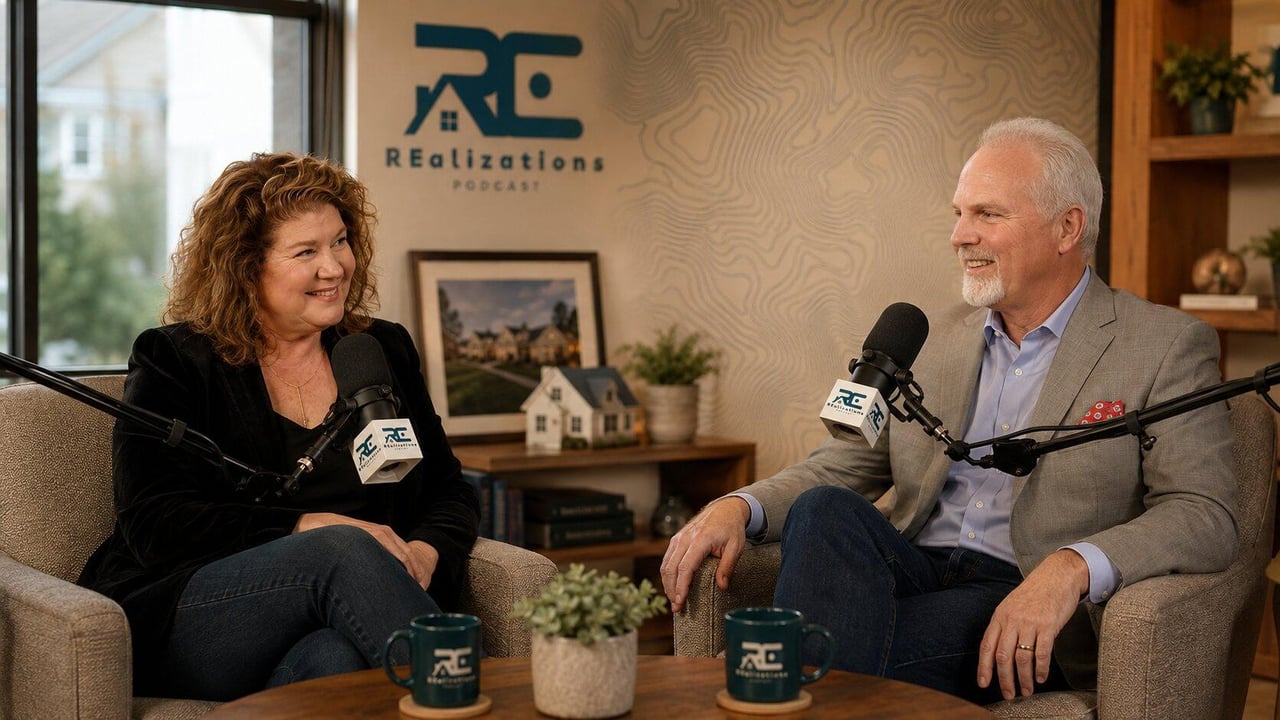
That experience left me wary—which is exactly why I invited Kevin Guttman of Reverse Mortgage Revolution onto the REalizations Podcast.
Kevin is a Senior Mortgage Broker, Certified Reverse Mortgage Specialist, and three-time Amazon best-selling author who holds credentials shared by fewer than 220 professionals nationwide.
What I learned changed how I think about senior clients entirely.
Curious about this conversation? Here's a quick preview of the moment Kevin explained why cash flow matters more than net worth for retirees:
Why I Wanted a Straight Answer About Reverse Mortgages
I've watched a reverse mortgage go badly. A client of mine once inherited a property where an $80,000 loan from the 1990s had ballooned past $500,000 by the time she took ownership. That experience left me wary of the entire product category, and it's exactly why I sat down with Kevin.
A reverse mortgage for seniors carries a reputation problem it doesn't deserve anymore. Most agents I know steer clients away from it on instinct, without understanding how the program has changed.
Meanwhile, a growing share of my own database is aging in place or thinking about a move that requires a smaller, single-level home. Getting this topic right matters for how I serve them, and it's also why I've talked with specialists like the team behind senior downsizing and move management on past episodes.
Kevin has spent two decades in residential financing, and he built Reverse Mortgage Revolution specifically to simplify this product for seniors and the agents who serve them. You can also find him and his team on LinkedIn.
Watch the full episode here:
How a Reverse Mortgage Actually Differs From a Traditional Loan
Kevin's first correction surprised me. Here's reverse mortgage explained simply: it isn't an exotic loan structure. It works like a traditional mortgage with three real differences.
Payments are optional, not required. The loan term runs 150 years from the youngest borrower, which functionally means it can never outlive the person living in the home. And it's non-recourse, meaning the lender's only claim is against the house itself, never the borrower personally.
Qualifying is simpler than most people expect. A borrower needs to live in the home as a primary residence, keep it maintained, and stay current on property taxes, insurance, and HOA dues. That's the whole list. HUD's official HECM program guidelines confirm the same structure, and the Consumer Financial Protection Bureau's reverse mortgage guide walks through borrower protections in plain language if you want a second source.
This reframes who a senior client actually is. They're not someone who ran out of options. They're managing cash flow on purpose, and clients who've worked through protecting their real estate and legacy with an estate planning attorney often ask me about this exact tool next.
The Three Ways Retirees Actually Use a Reverse Mortgage
Kevin broke this into three clear buckets, and the split reshaped how I think about it.
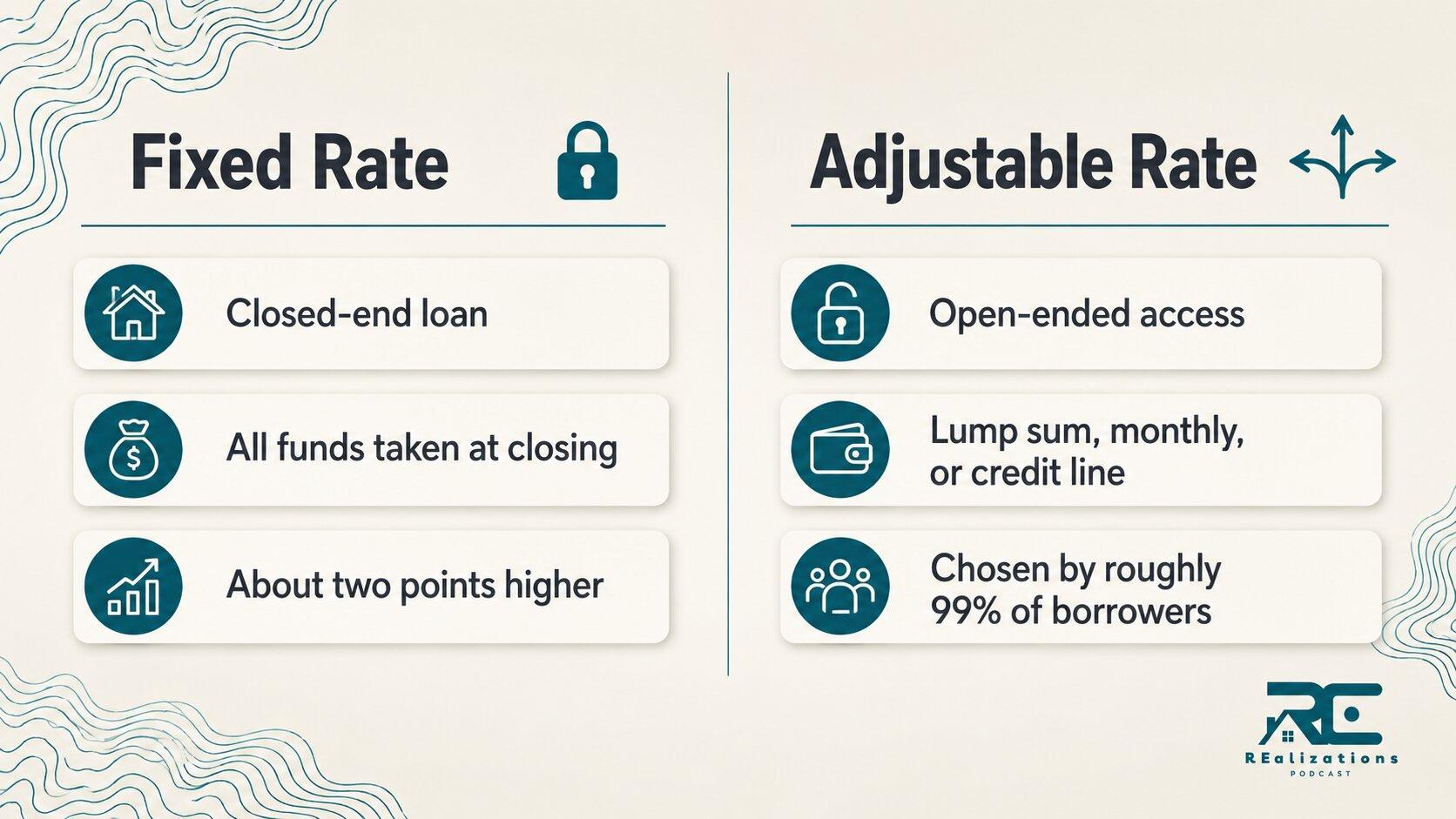
Two-thirds of borrowers use a reverse mortgage to make their mandatory monthly mortgage payment optional. About 30 percent use it to access equity in a classic house-rich, cash-poor situation. A smaller group finances the purchase of a new home entirely, through a program called HECM for Purchase.
This is the moment in our conversation that stuck with me most.
"What I found is that in these golden years of life for senior homeowners, cash flow really matters. Cash flow trumps pretty much everything else. They just need enough money to live each month. They don't want to have to choose between groceries and medicine, or whether they can take a trip or go out to eat. I had one lady tell me, 'You know, I just want some money to be able to go out to eat.' And I'm like, yeah, I know. It's those little things that people sometimes don't have much breathing room for when they're living on a fixed income."
–
That's not a financial strategy conversation. That's a grocery budget conversation, and it changes how I'd approach a client who seems asset-rich on paper but hesitant to make any moves.
Why Almost Everyone Chooses Adjustable Over Fixed
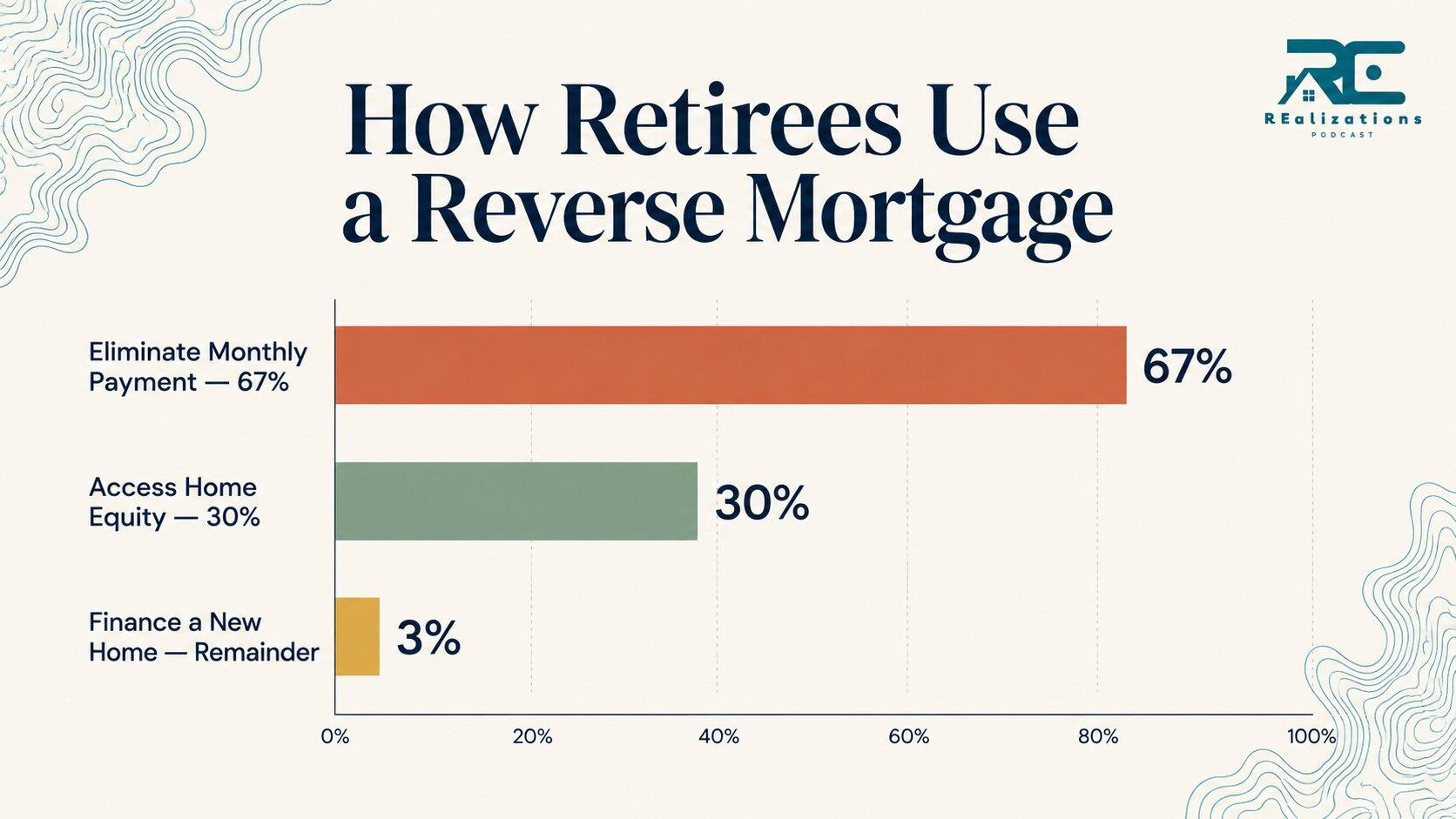
With a traditional mortgage, nearly every client I've worked with wants a fixed rate. With a reverse mortgage, Kevin says it's the opposite. Roughly 99 percent of borrowers choose adjustable, even at a rate about a point lower than conventional loans right now.
A fixed-rate reverse mortgage is closed-end, meaning the borrower has to take every available dollar at closing. An adjustable-rate reverse mortgage is open-ended, giving access through a lump sum, monthly payments, or a line of credit, and most people start with the line of credit because it can be adjusted as life changes. It's the same flexibility principle I explain to clients exploring alternative financing options for real estate when a standard loan doesn't fit their situation.
Kevin's line of credit explanation is one I'll be repeating to clients. The unused balance grows tax-free, stays protected from market swings, and compounds at a rate slightly higher than what the borrower pays in interest on their balance. He calls it keeping the teeter-totter in your favor, meaning the credit line should always be earning more than it costs.
Reverse Mortgage Myths and Heirs: What Heirs Actually Inherit
This is the part I most needed to hear, given my own history with this product. I asked Kevin directly whether heirs could inherit decades of compounding debt the way my former client did. He explained that HUD and Congress overhauled the program in 2015 specifically to protect seniors, adding income verification requirements that didn't exist in the earlier version I'd seen go wrong.
The safeguard that matters most is the non-recourse structure, the same one described in detail by the National Reverse Mortgage Lenders Association. Kevin walked me through the worst-case scenario step by step.
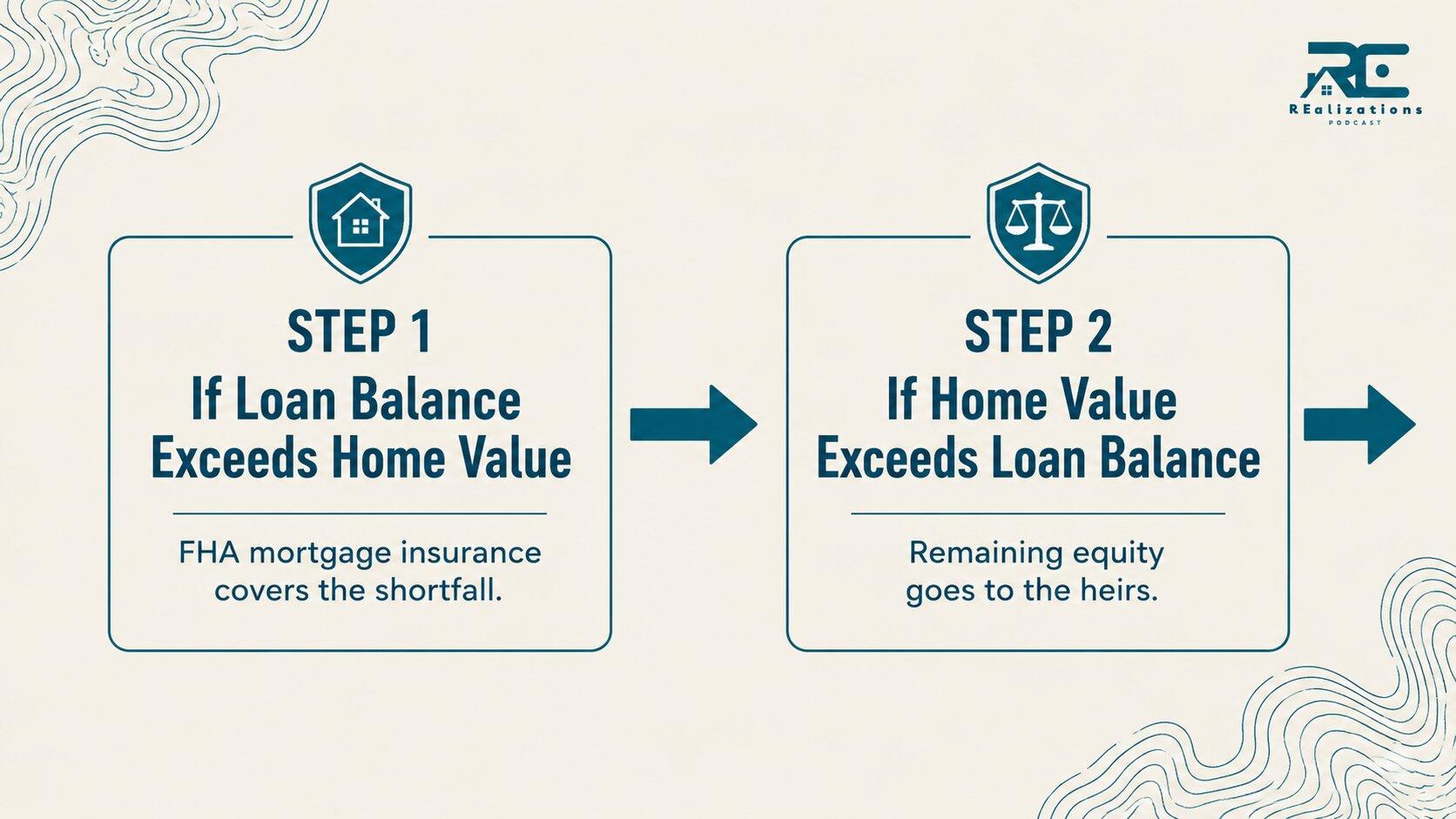
"No debt can be passed on to the heirs or the estate. Technically, they don't even owe the mortgage. It's non-recourse, meaning they're not personally liable—the house itself is responsible for paying off the mortgage. Let's say someone borrows as much as they can at the beginning, then takes out additional available funds in year two and eventually maxes out what they can access. If interest rates skyrocket and stay high for decades, while home appreciation remains flat or declines like it did in 2008, they could outlive the period the FHA projected they'd remain in the home. Now they're underwater—they owe $500,000, but the home is worth $450,000. That's where the mortgage insurance comes in. Most of these loans are FHA-backed and include mortgage insurance. What does that provide? No debt is passed on to the heirs, the estate, or the borrower."
–
If a home sells for more than what's owed, the difference goes to the heirs, exactly like any other mortgage payoff. If it sells for less, FHA mortgage insurance absorbs the gap. For anyone with a parent considering this product, Kevin's page on what heirs need to know about repayment is worth reading before that conversation happens.
The Client Stories That Changed How I Advise Seniors
Before this conversation, I would have steered a client away from a reverse mortgage on instinct. Now I think about it as one more tool for helping someone stay in control of their own life, as long as they understand exactly what they're signing.
Kevin told me about Carmen, an 84-year-old client referred to him by her daughter. Carmen had been using credit cards to buy groceries every month. Once the math was done at closing, eliminating her mortgage payment and paying off her credit cards freed up nearly $1,200 a month, and she told him it meant she could finally sleep at night without worrying about money.
The story I keep coming back to involves an elderly husband who wasn't in good health and wanted to be sure his wife would be secure after he was gone.
"He was not in good health. He said, 'I'm not going to be long for this earth. I want to be sure my wife's going to be taken care of when I'm not here.' I said, 'Tell me what that looks like.' He said, 'Well, I need her to have the right kind of house—low-maintenance, single-level—and I need to make sure she doesn't have a mortgage payment so she has enough money to live on when I'm not here. She'll have to start taking my Social Security, and hers goes away.' Sure enough, they closed on a condo right before Christmas. Six months later, she called me and said, 'Hi, Kevin, this is Sharon. I just want to let you know that my husband passed away. You told us that if this remains our primary home, we pay the property taxes, insurance, and HOA on time, maintain it, and I can stay for as long as I live, with no monthly mortgage payment. Is that true?' I said, 'That is true.' You could hear the sigh of relief on the other end of the phone. She said, 'Oh, good. That's the only way I can afford to stay in this home.'"
–
That's aging in place with a reverse mortgage working exactly as intended. A widow kept her independence and never faced a monthly payment, which lines up with aging-in-place research from the National Council on Aging showing most retirees strongly prefer staying in their own homes over moving into assisted living.
For agents, this also matters practically. Anyone in your database aged 62 and older with meaningful equity may be a better fit for how a reverse mortgage can fund a next-home purchase than a traditional move-up sale, and a smooth closing still depends on working with a trusted title company that understands how these loans settle.
Want to hear my entire conversation with Kevin Guttman of Reverse Mortgage Revolution and learn how reverse mortgages actually work in today's regulated landscape? Listen to the full podcast episode for all the insights and client stories we couldn't fit here.
Reverse Mortgage Frequently Asked Questions
Can a reverse mortgage leave my heirs in debt?
No. Reverse mortgages are non-recourse loans. The home alone is responsible for repayment. If the balance exceeds the home's value, FHA mortgage insurance covers the difference, and heirs are never personally liable.
Why do most people choose an adjustable rate instead of fixed?
Adjustable-rate reverse mortgages are open-ended, allowing access through a line of credit, monthly payments, or a lump sum. Fixed-rate reverse mortgages require the full amount to be taken at closing, which offers far less flexibility.
How long can someone stay in their home with a reverse mortgage?
As long as it remains their primary residence and they stay current on property taxes, insurance, and HOA dues, borrowers can stay for the rest of their life. The loan is structured around a 150-year term for the youngest borrower.
What is HECM for Purchase?
HECM for Purchase lets a homeowner 62 or older buy a new home, often one that's safer, single-level, or closer to family, by making one large down payment with no required monthly mortgage payment going forward.
Apply to Be a Guest on the REalizations Podcast
Conversations like this one with Kevin are exactly why I started this podcast: specialists who understand a corner of our industry well enough to change how the rest of us serve our clients. Real estate touches financing, aging, family, and security all at once.
If you're solving real problems for real clients, whether in mortgage lending, brokerage, construction, or development, I'd love to have you on the show and share that expertise with my audience.