
What if the offer your seller keeps throwing out is the safest one on the table? That question followed me around all week, and the answer flipped my thinking. Sellers are not taking a risk when they accept a VA offer. Instead, they are getting the buyer least likely to walk away when the appraisal comes in short.
On this episode of REalizations, I talked with Karen Hall of Foxtrot Company, a Northern Virginia broker who has served military families since 2004, about the myths quietly costing sellers money.
Here is a preview of how a VA offer beats a cash-heavy bid:
Why I Put a Military Housing Specialist in Front of My Audience
I started this show angry. After the commission lawsuits, I watched people who have never sat at a closing table make sweeping decisions about a business I have lived inside for almost 30 years. I have since spent a lot of airtime on how the commission lawsuit fallout is reshaping agent finances, but the better answer was always to show the public what we actually do.
Karen was the proof I wanted. She closes 35 to 40 transactions a year and does around 30 million in volume without a single paid lead source, working almost entirely with military families navigating a PCS move.
Her practice rests on one decision she made on day one.
“The thing I'm most grateful for is day one I was like, I don't know anything about real estate. The license exam doesn't exactly teach you that either. And I don't know anybody in Northern Virginia, but I do know the military. So day one I was like, I'm not going to be everything to everyone. Let me just be blatant and dig into what I know and become an absolute subject matter expert at that. And that was kind of my entire career. It opened all kinds of doors and opportunities. I got to advise NAR at one point about military housing questions they had on their mind. A lot of it was fueled by data. I pulled a report, and in our area we have all the military branches, and there's a billion dollars a year just in about a five-county radius of me of homes that are purchased with a VA loan every year. When I looked that up, about 80 percent of those transactions are represented by an agent who's done one VA deal. And I'm like, that is a huge under-service to this community.”
:::
That is not a marketing niche. That is a competency moat, and it is why agents in her market hand her their military clients rather than fumble the file.
Watch the full conversation on how VA buyers win multiple offer situations:
Where the Bad Reputation Around VA Financing Actually Came From
In my market, a VA offer reads as a liability. Sellers hear government loan and picture a slow closing. Nobody can explain how someone buys a 1.2 million dollar home without putting money in.
Karen flipped that for me. The program is sound. A few large lenders built the reputation problem through sloppy execution, and the loan type absorbed the blame. Most VA loan misconceptions trace to that history, not to the underwriting.
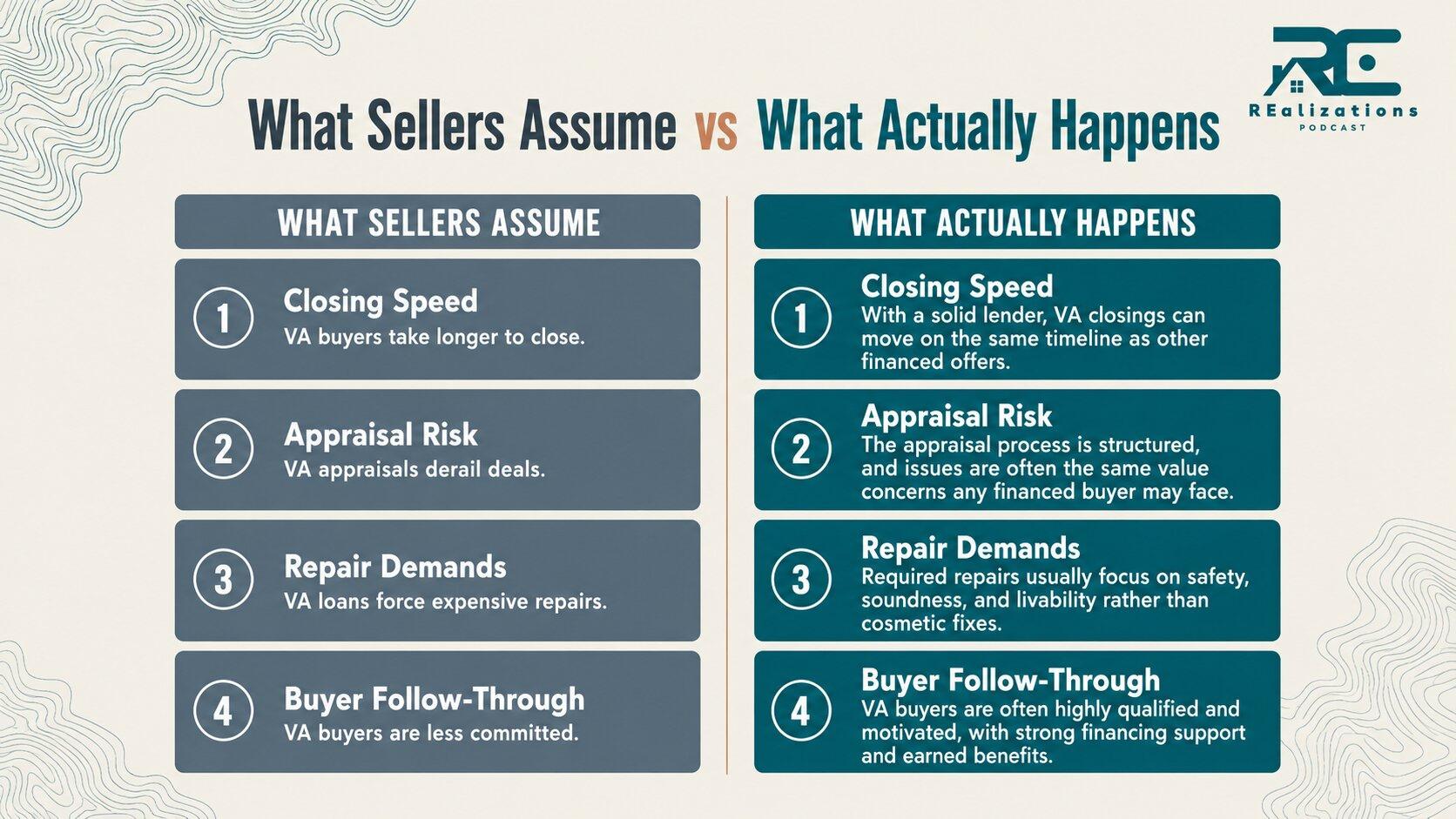
Her fix starts before the offer is written. Pair a military relocation real estate agent with a lender who knows the product and the fear drops away. She tells agents that 80 percent of an offer's strength is the lender behind it, which tracks with everything I have learned about financing the deals conventional banks turn down.
The zero down structure is also normal, not exotic. According to the Department of Veterans Affairs, nearly nine in ten VA-backed loans close with no down payment, which is exactly why a seller's instinct misreads the file.
The Appraisal Gap Move That Beats a Cash-Heavy Buyer
This is the part I would tape to my desk. It took Karen a decade inside this niche before anyone explained it to her.
When a VA buyer puts money down, that down payment can absorb an appraisal gap up to the same amount. The monthly payment does not move, and neither do the closing costs the VA allows a borrower to pay.
“I always tell agents that 80 percent of the strength of an offer is the lender itself, so partnering with a good VA lender that has a great reputation matters. There are so many advantages to someone using a VA loan for the seller, not even for the buyer or the service member. I've only served the military community, and it took me a decade for someone to tell me that if you're buying a home with a VA loan and you're putting money down, so it's not 100 percent financing, let's say you're putting 50,000 down, you can cover an appraisal gap up to that 50,000 with zero impact. It does not change your monthly payment, and it does not change your closing cost whatsoever. And I'm like, if I'm going up against a conventional buyer with my VA buyer, I'm going to say, do you guys have the cash for it? Are you going to have enough cash to come up with it if it's a low appraisal? There's no impact to my guys. And then we can offer these appraisal gaps with no impact to my service member. It's kind of a no-brainer.”
:::
Look at the leverage. The conventional buyer has to produce real cash for a shortfall. The VA buyer already has it sitting in the down payment. Present that VA appraisal gap strategy in the cover email and the listing agent stops seeing a weak offer.
Karen shared a version of that cover email in a realtor Facebook group years ago, and hundreds of agents asked for a copy. I asked for one on air too, and it is the same logic her team walks buyers through when preparing an offer on a Northern Virginia home.
What VA Appraisers Are Genuinely Looking For
The second objection is condition. Sellers picture an appraiser hunting for reasons to kill the deal.
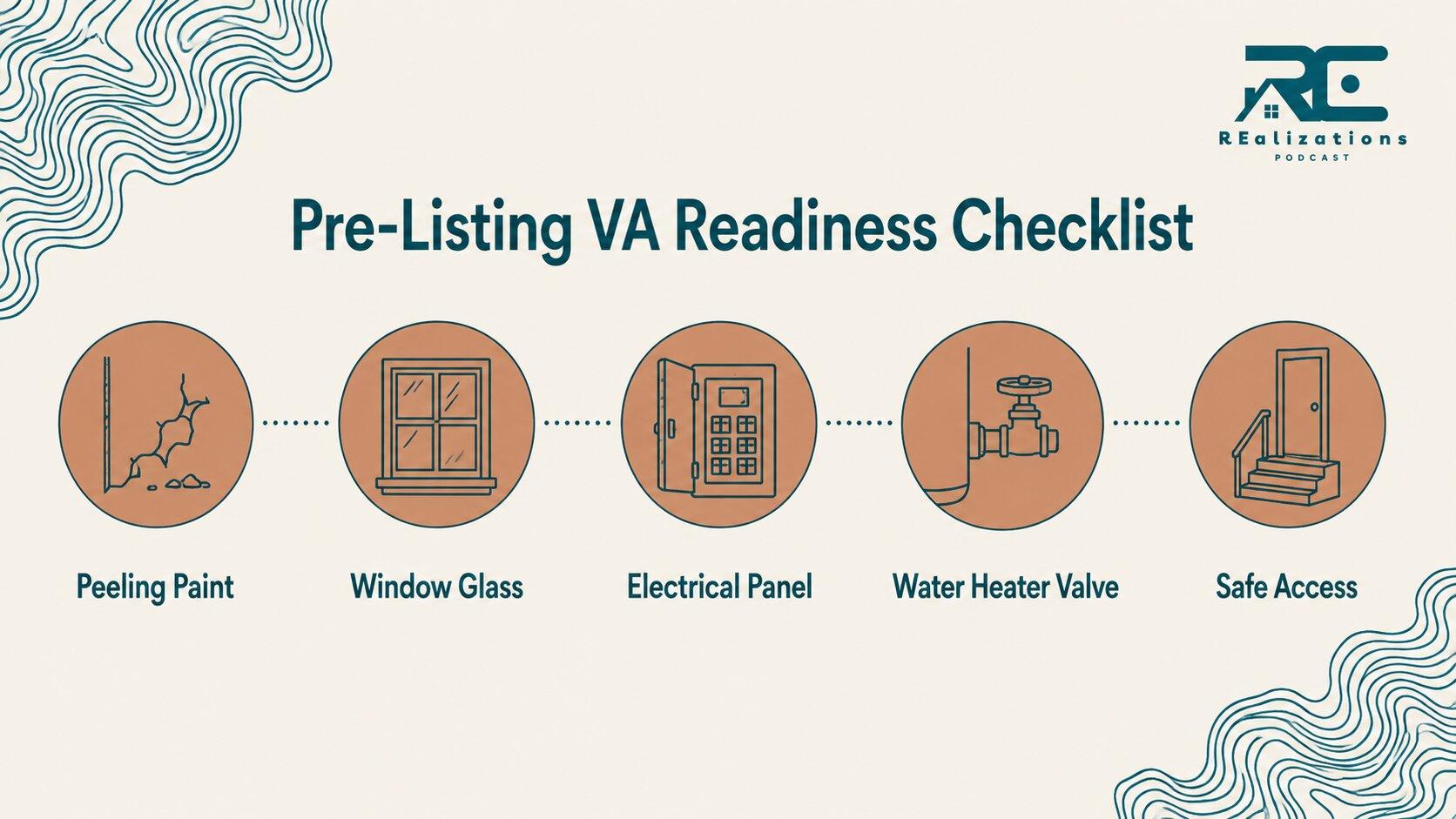
In 23 years, Karen has not seen a property fail. The list is short, cheap, and focused on safety, and the agency loosened several of those minimum property rules in 2026 to cut delays for veteran buyers.
Once you know the real list, the fear looks unreasonable, and Karen carries that straight into negotiation.
“I've honestly never in 23 years come across a property that wasn't approved. That's another big misconception, like, oh, appraisers are so nitpicky, they're going to pick out everything. They really love peeling paint, and it cracks me up, but they're worried about the safety because of the lead. Broken windows, but even with that, they recently had changes where if it's a broken window but there's a storm window, that's okay. They're just looking for electrical boxes hanging out of the walls, and their other favorite thing is on a water heater: the pipe down from the TPR valve, it has to be within six inches of the floor. I've fixed some of those myself before. It's those little tiny things is really all they're looking for. And I was in a bidding war once, and the agent on the seller side was calling to tell me we weren't going to win because we were a VA and the seller had concerns about the appraisal. And I said, cool. If you're really concerned about that, I have no concerns. The buyer will give the sellers a 2,000 dollar credit at closing. If there are any appraisal issues, that'll cover that. If they're not, then congratulations, you got 2,000 dollars. And he's like, hold on, you just won.”
:::
She priced the seller's fear and erased it for 2,000 dollars. That works on any objection, in any market, on any loan type.
Why She Manages Renovations for Sellers Who Already Shipped Out
Most of her sellers have PCS orders and are physically somewhere else. She picks up keys from renters. So her team runs the pre-sale work, showing an as-is price beside a fixed-up price and letting the math decide.
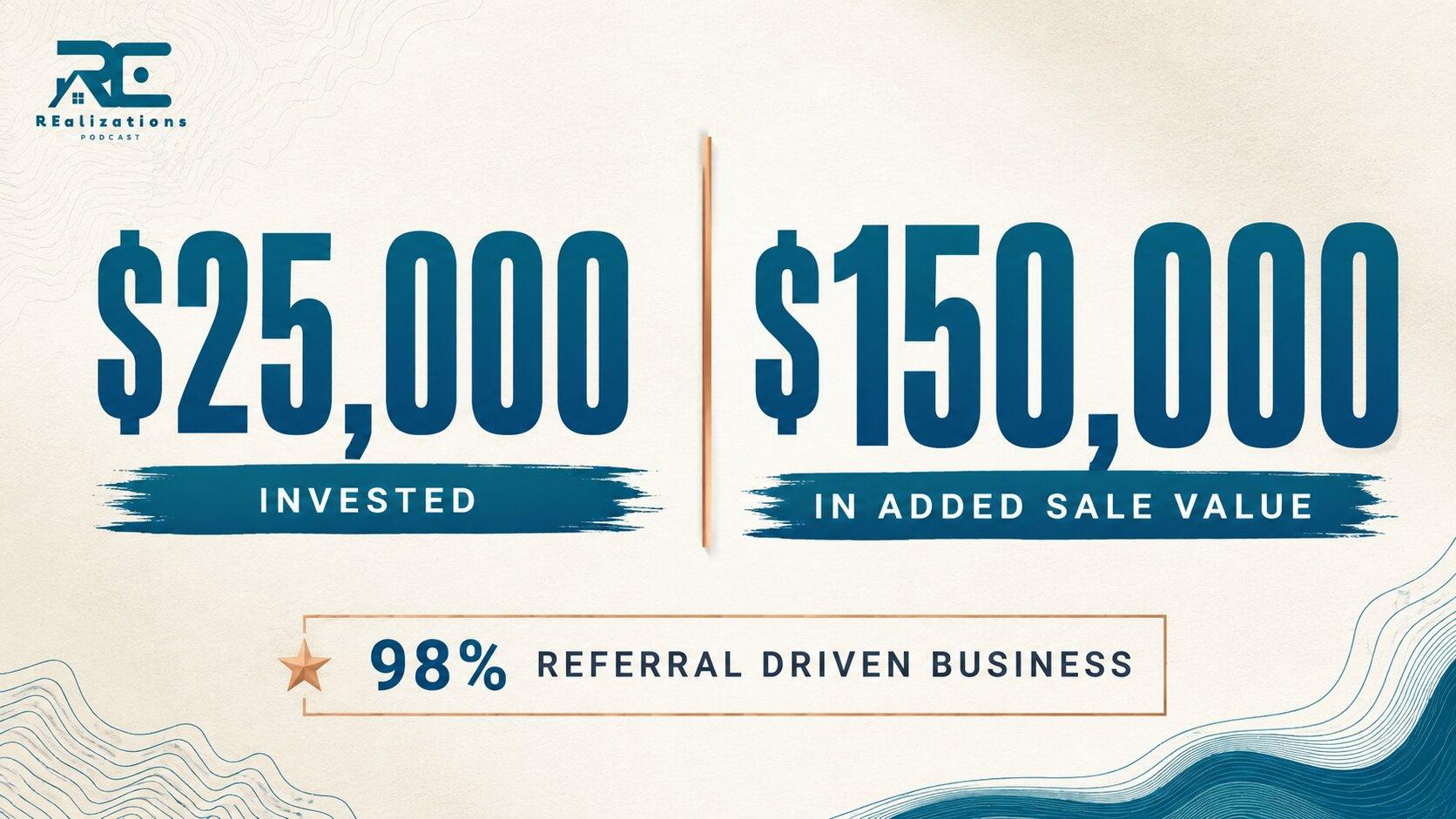
One recent seller spent about 25,000 dollars and captured roughly 150,000 in value. She pays for staging herself, because optional staging does not happen, and I have watched staging done right rescue a listing in a shaky market more than once.
At Compass, we keep our distance from renovation work, mostly over litigation exposure. Karen's protection is structural. She gives advice and project management, never financing, and uses a one-page addendum stating she cannot guarantee sale price or appraised value. The owner decides.
Her repeat cycle runs on orders rather than life stage. Rent, buy, deploy, manage or sell, return, buy again. That rhythm feeds a referral based real estate business where 98 percent of the work arrives without paid leads and some clients have stayed 18 years, which is the same upstream referral model I keep coming back to. She also returns a share of commission to service members, first responders, nurses, and teachers, and she helped shape the national certification that trains agents to serve relocating service members.
What I Am Taking Back to My Own Market
I have closed two VA loans in a 30-year career. I could not name a local VA lender off the top of my head, and I said so on air.
That is what treating a loan type as a rounding error costs. Somewhere in the Bay Area, a service member is losing a house because their agent cannot argue the case.
So I am building a lender relationship before I need one, and I am stealing the priced objection move for every competitive offer I write. You can follow more conversations like this one on my real estate feed or on my professional page for Bay Area market notes, and Karen shares daily field notes on military relocation and her professional background in military real estate as well. Talking with Karen Hall at Foxtrot Company reminded me that depth beats reach. The agents serving Northern Virginia military home buyers well got there by choosing to know one thing completely.
Curious about how Karen Hall turns VA loans into winning offers that sellers actually prefer over cash? Listen to our full podcast episode where she breaks down the appraisal gap strategy, reveals what VA appraisers really look for, and explains why specialized expertise wins in multiple-offer situations.
FAQ
Do VA loans really take longer to close than conventional loans?
Not when the lender knows the product. Karen's position is that 80 percent of an offer's strength is the lender behind it, and most delay stories trace back to volume shops that mishandled the file rather than to the program.
Can a VA buyer cover an appraisal gap?
Yes, when the buyer is putting money down. That down payment can absorb a gap up to the same amount without changing the monthly payment or the closing costs.
What causes a VA appraisal to flag a property?
Health and safety items. Peeling paint, broken windows without a storm window, exposed electrical boxes, and a water heater discharge pipe that does not terminate within six inches of the floor.
Should a military seller renovate before listing?
Often yes. Sellers with two or three years of ownership need every dollar of equity, and a managed pre-sale scope can return several times its cost.
Apply as a Guest on the REalizations Podcast
Specialized knowledge is what separates agents who win offers from agents who apologize for them. Every market has professionals solving problems nobody else bothered to learn.
If you work in brokerage, lending, construction, or development and you have built expertise your peers do not have, I want that conversation on the show.