
Real estate rewards people who show up as themselves. Not the polished version they think will sell better, but the real one.
On REalizations, I sat down with Michael Coxen of Coxen & King, a Las Vegas real estate professional whose career has taken some sharp turns. We talked about work-life harmony, personal accountability, and why conversations still beat clicks.
Here’s a preview of that episode:
Why I Had This Conversation
I started my podcast because I was tired of watching our profession getting flattened into a punchline. Real estate agents are licensed, fingerprinted, and background-checked. We intersect with people at some of the most important financial moments of their lives. That deserves more respect than it gets.
So, when I got the chance to talk with Michael, I knew the conversation would go somewhere real. Michael is a broker, team leader, and coach based in Summerlin, just outside Las Vegas. He has built a career from the ground up, more than once. His story is not a straight line, and that is exactly what makes it useful.
Watch the full episode here:
Work-Life Harmony, Not Work-Life Balance
Michael does not believe in balance. He believes in work-life harmony, and the distinction matters more than it sounds.
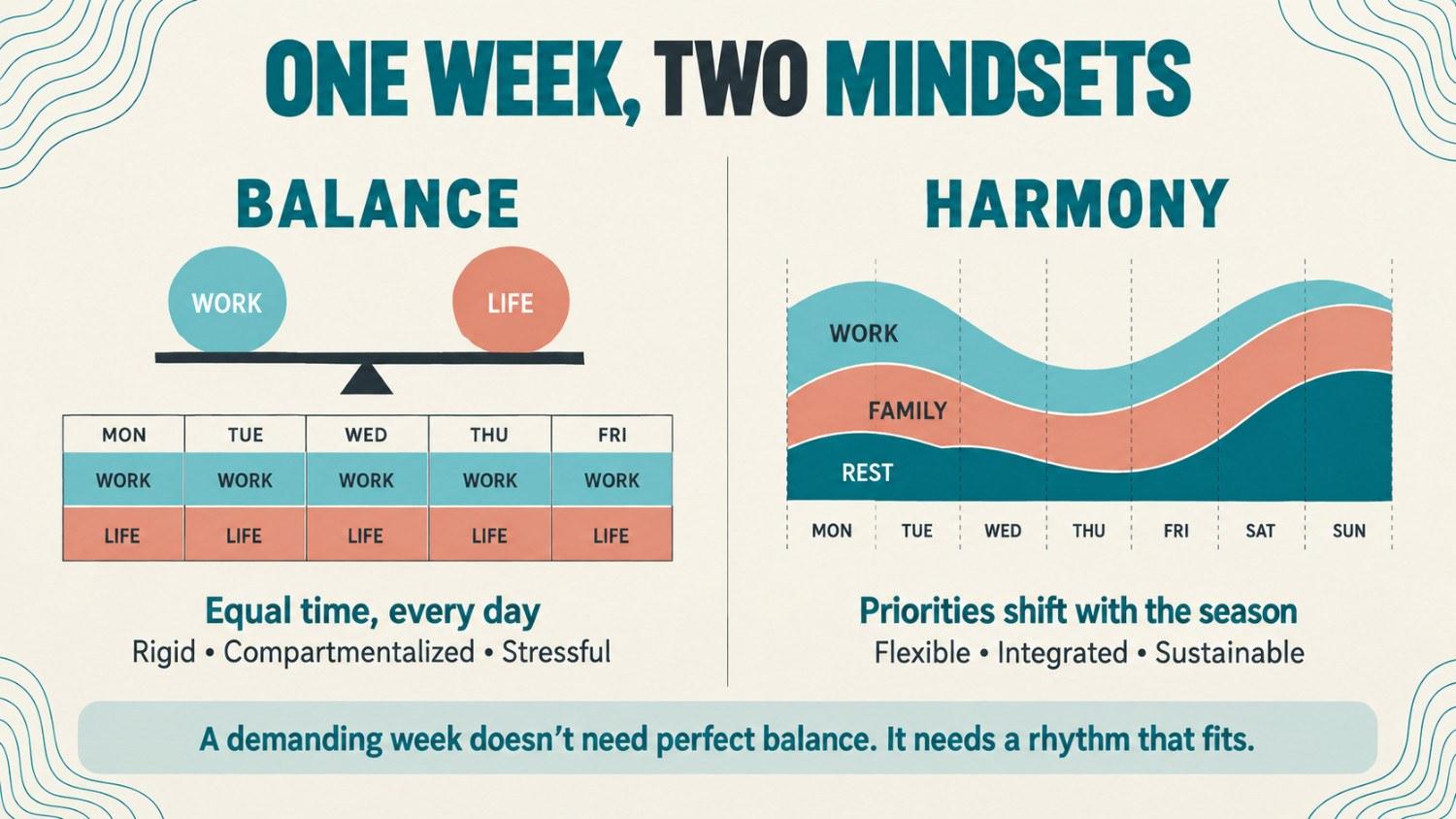
Balance suggests two things sitting in equal weight on a sc
ale. Harmony suggests something more honest. Some seasons ask more of your business. Other seasons ask more of your family. Fighting that rhythm creates stress. Accepting it does not.
Here is how Michael described it when we talked:
“I like to call it work-life harmony because I think balance is something that will never happen. There are seasons in life. There are seasons in every year, and then we need to just be okay with, like, sometimes you're working on vacation, and sometimes, you're taking a day off on a Monday. This is our life. This is not work. This is not family; to compartmentalize everything, I think, is a myth and actually causes more stress.”
I think about my own schedule differently since this conversation. Real estate does not run on a clock. It runs on seasons, and fighting that only wears you down faster.
What Real Human Connection Looks Like in Real Estate
Michael is active on social media. He posts often and shows up consistently. But he has never sold a house directly from it. No comment or direct message has ever converted into a closing.

That does not mean social media is useless. It means it plays a different role than most agents assume. It builds familiarity. It keeps you visible. The actual human connection in real estate happens somewhere else entirely, in a phone call or a conversation over coffee.
Here's how Michael put it when we talked about his own marketing:
“I'm very prolific on social media. I have not sold one house because of social media directly, meaning somebody DM'd me or commented and said, sell my house. But it is a tool that gets me in front of people to have conversations, so they remember me and call me, but then we meet and talk in person.”
That distinction changes how I think about marketing. Visibility gets you remembered. Conversation gets you hired.
Michael applies the same principle to his direct mail. Instead of listing square footage and bedroom counts, he tells the story behind each sale. That approach earns him a return rate several times higher than the industry standard, because people respond to stories, not spec sheets.
The Season That Changed His Career
Michael's path was not a straight climb. He joined a team as a new agent, became its top producer, made partner, and eventually bought the brokerage outright. On paper, that looks like success. In practice, it did not fit.
Running a brokerage meant compliance work and paperwork, tasks that drained him rather than energized him. So, he made a hard call. He stepped back from ownership and returned to the parts of real estate he actually loves: talking with people and helping them through one of the biggest transactions of their lives.
That decision led to what he now calls auditing your real estate business, a habit of checking in every few months on what is working, what is not, and where you personally belong in the business you built. During a slow stretch earlier this year, that audit led him to hire an operations manager instead of another buyer's agent, a decision that reshaped how his team runs.
This kind of clarity about strengths shapes how Coxen & King works with clients, too, and it's part of why their approach tohelping homeowners sell their homes for more starts with understanding what each seller actually needs, not a one-size answer.
What Changed for Me After This Conversation
Michael reminded me that growth in this business does not always look like climbing higher. Sometimes, it looks like stepping back into a role that fits.
“Once I shed that business and went back into doing what I love, I honestly, I've never been happier. This has been the best. It's only happened three months ago, and it's been one of the best three months of my career. And ironically, it's been the slowest part of my career sales-wise.”
That last part stuck with me. The slowest season of his career became one of the best, because he used it to reassess instead of panic. I am applying that same lens to my own team now, auditing roles with fresh eyes the way Michael did.
Whether I'm working with agents pursuinghomes for sale in the Bay Area or talking with someone building a team in Las Vegas real estate professional circles, like Michael, the takeaway holds steady. Know your strengths. Build the business around them. Stay honest about the rest.
Want to hear my full conversation with Michael Coxen of Coxen & King on why authenticity beats hustle in real estate?
Frequently Asked Questions
Does social media actually get real estate agents clients?
Not directly, based on Michael Coxen's experience. He posts consistently but has never closed a sale from a comment or direct message. Social media builds familiarity and keeps him visible, but the actual conversion happens once a real conversation begins, usually in person or over the phone.
How do you know when to leave a role you worked hard to get?
Michael went from top producer to partner to brokerage owner, then stepped away once he realized the broker-owner role wasn't authentic to who he is. The months since have been among the happiest of his career, even during a slower sales stretch.
What should a real estate agent do when sales slow down?
Use the season to audit your business rather than panic. Michael used a slow period to bring on an operations manager and reorganize his team, setting up stronger footing for when the market picked back up.
Apply as a Guest on the REalizations Podcast
Real estate is full of stories like Michael's: career pivots, hard lessons, and moments of clarity that arrive at the worst possible time and turn out to be exactly right. If you're a real estate professional with insight worth sharing, I'd love to have you on my show!
REalizations produced by Icons of Real Estate, the #1 Real Estate Podcast Network. If you are a real estate professional, apply to be a guest speaker across the network!