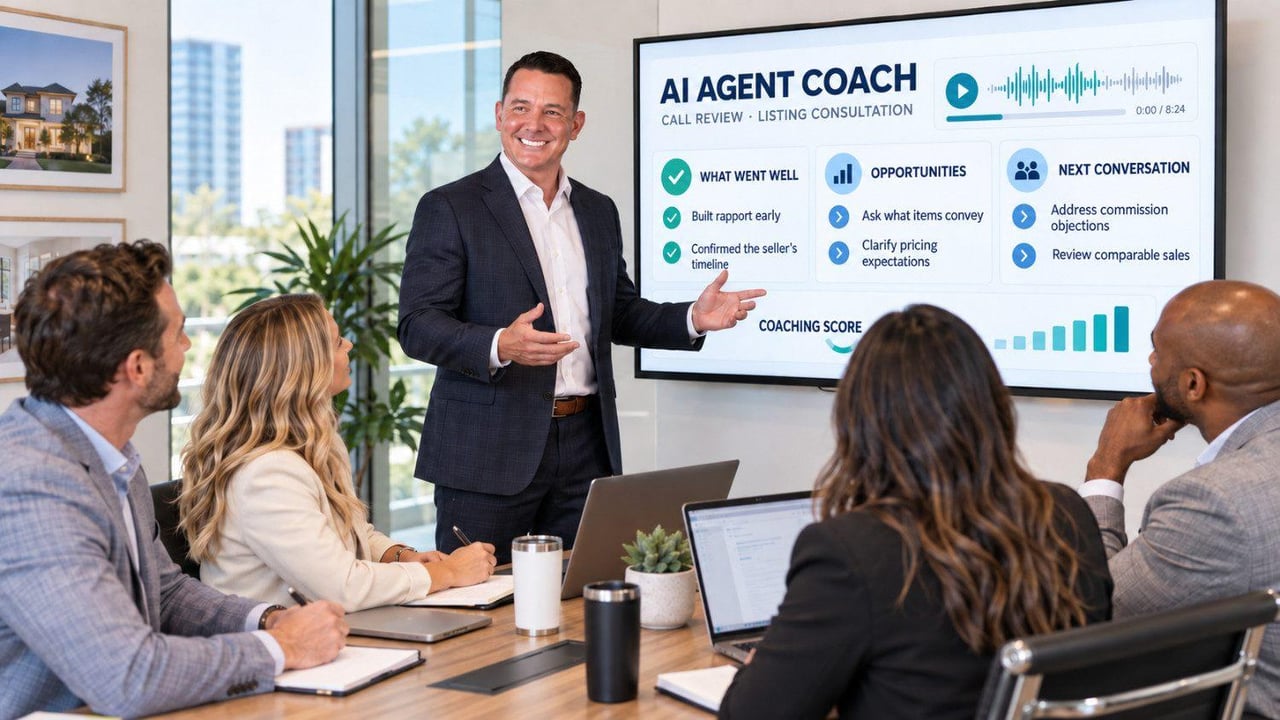
Most agents don't lose deals because they didn't learn the material. They lose deals because nobody was standing next to them the moment it mattered, catching the mistake before it turned into a check they had to write.
That is the problem Chris Watters of Watters International Realty has spent the last seven years trying to solve. I sat down with him on REalizations to talk about what happens when AI, not another coach, becomes the one watching over an agent's shoulder.
Here’s a preview of that episode:
Why I Had This Conversation
I started REalizations because of the NAR commission lawsuits and how badly misunderstood our profession had become. I wanted a way to show people what realtors actually do, who we work with, and how much of the economy runs through us.
That is why a conversation with Chris mattered to me. He isn't theorizing about agent training from the outside. He is the broker-owner of Waters International Realty, a residential brokerage doing roughly 5,000 sales a year with 200 agents and 300 W-2 employees behind them, and he built his own tech platform to fix the gaps he kept watching agents fall into.
Watch the full episode here:
The Roadmap Nobody Hands New Agents
Chris said learning real estate is like learning to swing a bat. You can sit in a classroom and understand the mechanics. You still won't know if you're doing it right until someone watches you swing and tells you to adjust.
Most brokerages simply don't have enough coaches for that. When you have one broker or trainer for every hundred or two hundred agents, nobody can follow each person into the field to catch the small mistakes before they become expensive ones.
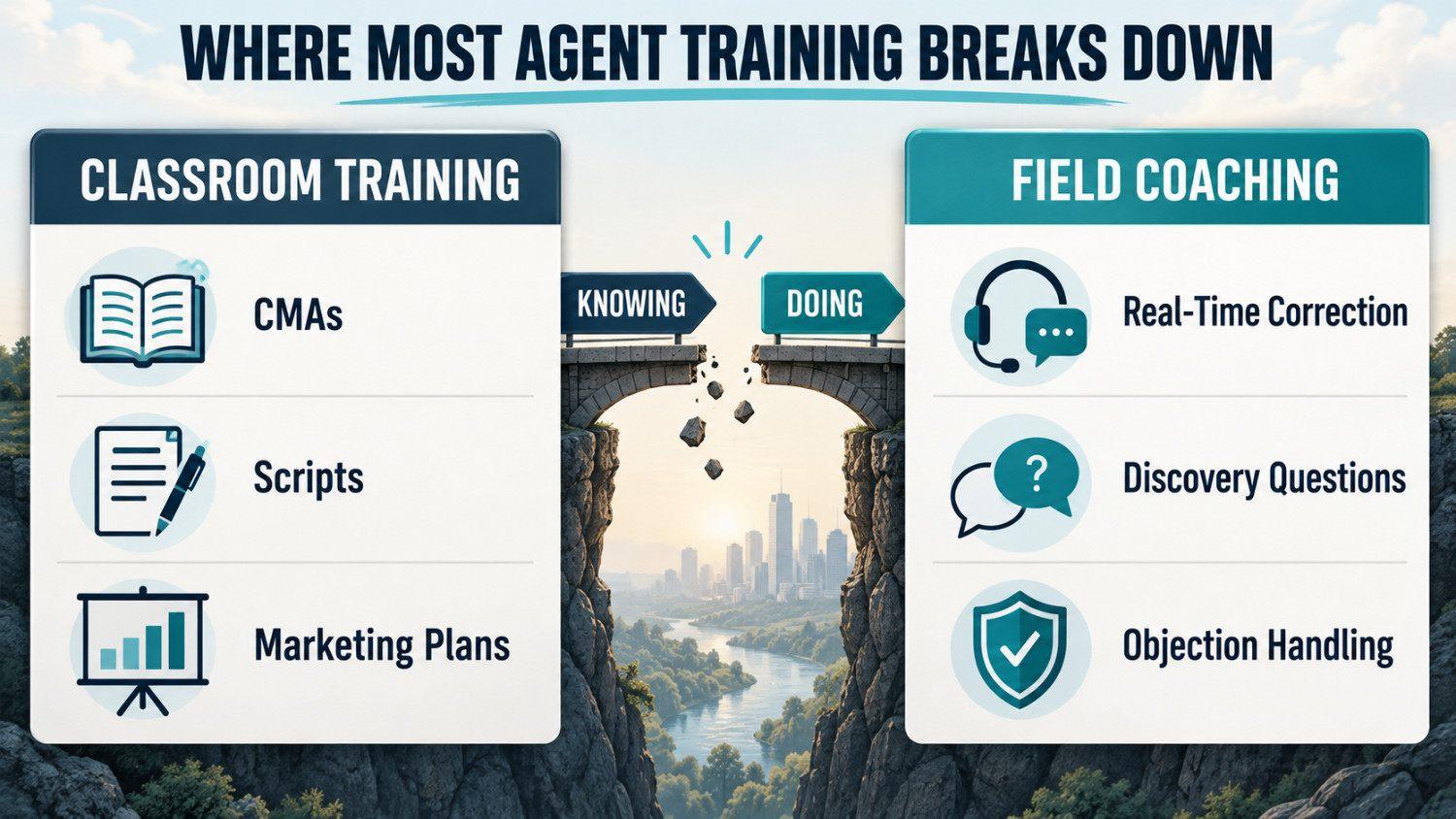
That gap between knowing something and doing it correctly under pressure is exactly where Chris built his business.
The Cost of Slow Feedback Loops
Chris told me a story about a missed discovery question that turned into a real commission hit. He hadn't asked a seller whether certain items would convey with the house, and the assumptions on both sides didn't match.
“What sucks is, you know, those feedback loops are slow. Like you don't know you screwed up until it was probably a costly mistake. And you're forking over your commission to the seller, saying, ‘I'm so sorry I screwed this up. I'm gonna, you know, give you whatever ten thousand in commission or whatever, you know what I mean?’ Like, for example, when I went to that listing appointment, I should have asked them, ‘Is this gonna convey? Because the seller was expecting they were gonna take it, and the buyer was expecting it to stay.”
That single missed question is the kind of thing agents only learn from once it costs them money. Chris built his AI-powered agent training platform specifically to shorten that gap between a mistake and the lesson.
HisTABLE performance enforcement system tracks the key performance indicators that actually predict whether an agent hits their income goals and then flags the specific behaviors that are holding someone back before those behaviors turn into lost commission.
How AI Is Becoming the Coach in the Room
What stood out to me most was how the platform works after a client call ends. It digests the recording from an agent's CRM and immediately surfaces what went well, what got missed, and what to prepare before the next conversation.
There is also a mobile tool that listens during in-person appointments, functioning like an AI note taker built specifically for real estate. If an agent gets stuck fumbling a commission objection, the system flags it afterward and coaches them on how to lead a seller toward their own pricing conclusion instead of just dictating a number.
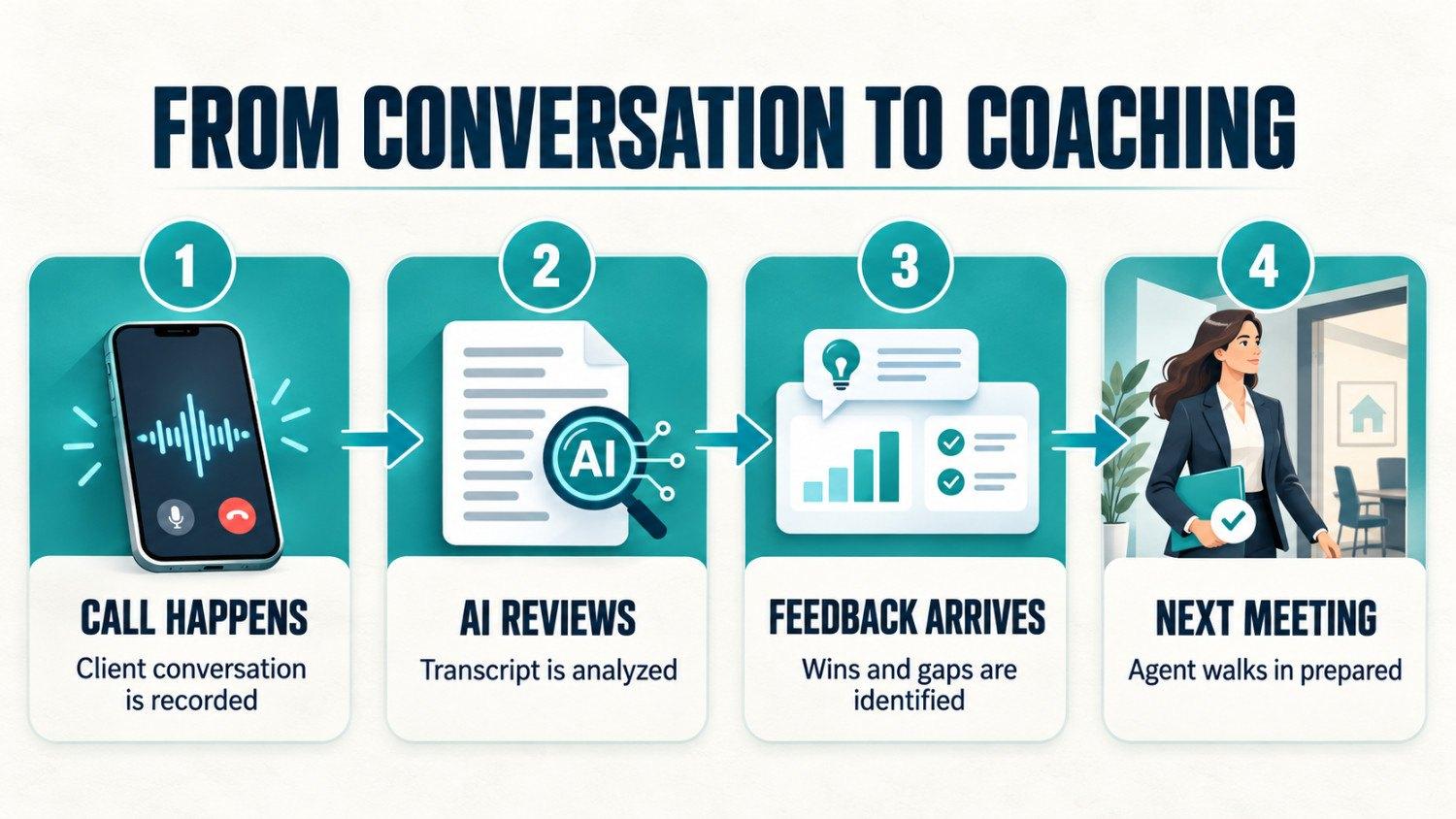
Chris was clear that this doesn't replace coaches or brokerages doing good training work. It fills the specific gap those programs can't reach, which is what happens the moment an agent is alone in front of a client.
Turning Website Traffic into a Real Database
The part of our conversation that genuinely surprised me was about lead generation. Chris pointed out that most agents only convert two to three percent of the people who visit their website into an actual lead form submission.
“For anybody who spends money on lead generation to try to get clients, if you look at how many people hit your website and then what percentage of those actually fill out a lead form saying call me, it's two to three percent. So we built this tool that will take the IP address of all the people coming to your website, and it converts that anonymous traffic that never fills out a lead form into a contact record.”
That tool isRealsynch business intelligence software, and it reframed something for me. I used to think lead generation was purely an advertising spend problem. Chris treats it as a real estate database growth problem, and his own database has grown at roughly fifteen times its previous rate because of it.
If you want the fuller framework behind how Chris scaled his brokerage into an enterprise, he lays it out in The Million Dollar Real Estate Team, which is worth reading whether you lead a team or want to build one.
What Changed for Me After This Conversation
“I mean, I think, you know, I'm a big fan of the coaches out there in the coaching industry. And what's challenging, though, is like sometimes the student or the agent is describing their problem to the coach, and the coach doesn't know any better. And so they take it at surface level, and they teach the agent how to solve it, but then their business doesn't grow. And then they learn a year later, I was solving the wrong problem.”
That line stuck with me because it applies far beyond real estate. You can't fix a problem you've misdiagnosed, and most of us don't know we've misdiagnosed something until much later.
I walked away from our conversation thinking differently about what coaching should look like in this industry. The best version of it isn't a monthly call. It's a system that sees what's actually happening in real time and tells you the truth about it immediately.
It also made me think about my own corner of the business. Even when I'm helping buyers browselisting homes for sale in the Bay Area, the same principle applies. The agents who serve people well are the ones getting honest feedback loops, not just repeating what always worked before.
Want to hear my full conversation with Chris Watters of Watters International Realty on how AI stops agents from repeating costly mistakes?
Frequently Asked Questions
Who is Chris Watters of Watters International Realty?
Chris is the broker-owner of Watters International Realty, a residential brokerage completing roughly 5,000 sales a year. He is the founder of an AI platform built to train agents through real-time feedback.
How does AI help real estate agents improve after client calls?
The platform reviews recorded CRM calls and delivers immediate feedback on what an agent did well, what they missed, and what to prepare before their next client conversation.
What does Realsynch do for an agent's database?
It enriches anonymous website traffic with contact information such as name, email, phone number, and mailing address, turning visitors who never filled out a form into real leads an agent can nurture.
Apply as a Guest on the REalizations Podcast
Real estate is changing fast, and the agents, brokers, and entrepreneurs actually solving problems in this industry, whether in brokerage, technology, coaching, or investment, are exactly who I want to talk to. If that sounds like you, I would love to hear your story on Realizations!
REalizations is produced by Icons of Real Estate, the #1 Real Estate Podcast Network. If you are a real estate professional, apply to be a guest speaker across the network!